• Home
  • About
  • Contact
  • Home
  • About
  • Contact
Babydotdot

pregnancy, parenting and baby guide for awesome parents!

Why Is Using Coconut Oil for The Baby Skin to Treat Eczema Is Effective?

4/22/2019

0 Comments


Read the original post Why Is Using Coconut Oil for The Baby Skin to Treat Eczema Is Effective? on BabyDotDot.

Parenting is hard, especially if your child has eczema. But don’t worry! There are many natural remedies you can try out. One such baby eczema treatment is coconut oil.

Eczema sufferers, whether only a toddler’ or older, endure the discomfort of very itchy skin that can be caused by a certain allergy they have. Treating eczema through virgin coconut oil can help relieve their sensitive skin and bring them comfort.

Coconut oil for eczema isn’t the only way to treat baby eczema. There are many tips and advice you can get online regarding all sorts of treatments, natural remedies for baby eczema is just one of them.

Discover new products with some coconut oil for eczema reviews!

Managing eczema isn’t impossible, especially now that there are many products specially formulated for atopic dermatitis and other types of eczema. All you need to do is find the best baby eczema cream, lotion, soap, and other necessities (even laundry detergent !) that works best for your little one.

Yes, that does mean going out of your way but ensuring you have products like these one hand can help lessen the uncomfortable feeling your baby has, and alleviate the itchiness he feels. It can even soother dry skin. There are a number of antibacterial products that can help you out, organic or not.

So, in this article, we’ll explore:

  • The 5 Best oil for eczema
  • How Does coconut oil help eczema?
  • How to use coconut oil for eczema?
  • How long does it take for coconut oil to cure eczema?
  • Is baby oil good for eczema?

The 5 Best Oil for Eczema

baby acne treatment

When it comes to treating eczema, you would want to do it as soon as you can! Constant scratching can cause scarring eventually and no one wants that for their kids. Good thing there are many different oils for eczema that you can purchase and try out. These products will help hydrate the dryness of your baby’s skin, reduce inflammation, and soothe itchiness.

Here are a few recommendations of oils that help eczema:

1. Pur360 Tamanu Oil

Pur360 Tamanu Oil - Pure Cold Pressed - Best Treatment for Psoriasis, Eczema, Acne Scar, Foot Fungus, Rosacea - Relief for Dry, Scaly Skin, Blisters and More

If you want an organic variety from only the highest quality, try the Tamanu Oil from Pur360. Its Tamanu oil comes from the beautiful tropical islands of Polynesia. It is also USDA certified to be organic, so you know you’re only getting first-rate and the purest oil there is. You are guaranteed that no harmful chemicals are added to the mix.

Tamanu oil is known for its incredible ability to promote the formation of new tissue which means faster growth of healthy, glowing skin. This is an excellent trait to have for people and babies that suffer from skin diseases like psoriasis and eczema. This oil is a fantastic natural moisturizer as well.

It even comes in a pump bottle so that you only get the right amount without spilling any leftover.

2. Teddy Organics Organic Rosehip Oil

Organic Rosehip Oil – 100% Pure Unrefined Cold Pressed Rosehip Seed Oil - Best Moisturizer for Face, Hair - Great for Fine Lines, Wrinkles, Acne Scars, Sun Damage, Stretch Marks, Eczema, Psoriasis

Try the wonder salve that Indians from high up in the mountainous areas of Southern Chile swear by. Rosehip Oil has proven that it actually works and people have been using it for centuries. This oil is truly rich in nutrients that can help manage eczema your baby has.

From fatty acids like Omega 3, Omega 6, and Omega 9 that improve the skin’s barrier, it also has antioxidants and beta-carotene and Vitamin C that help fight off free radicals that cause diseases. Rosehip oil is also amazing moisturizer that can help soothe dry, irritated skin, reduce inflammation and the appearance of scars.

It can also be used by adults as it can minimize fine lines and slow down skin aging as well. It can even lessen stretch marks and soothe burns.

3. Sky Organics Sweet Almond Oil

Best Sweet Almond Oil by Sky Organics 16oz- 100% Pure, Cold-Pressed, Organic Almond Oil. Great As Baby Oil- Anti- Wrinkles- Anti-Aging. Almond Oil- Carrier Oil for Massage.Bath Pearl & Flakes

Almond Oil is another fantastic natural moisturizer that you just have to try! Aside from being safe for sensitive skin, it’s also rich with many antioxidants, fatty acids, and vitamins that help nourish, hydrate, and heal the skin.

It can even relieve skin rashes and hair loss. You can also use it for lightening the dark circle under your eyes. Not only can it help alleviate your baby’s eczema symptoms, but you can use it for so many things as well!

4. RejuveNaturals Tamanu Oil

Tamanu Oil (1oz) USDA Certified Organic, 100% Pure, Cold Pressed by RejuveNaturals. Best Psoriasis Treatment, Eczema Relief & Rosacea Treatment. For Acne Scars, Stretch Marks, Dry Skin & Itchy Scalp

Another great Tamanu Oil is from the brand, RejuveNaturals. It is made to be 100% organic so you know you’re getting a brand that’s the highest quality with no harsh chemicals added. That’s right; it’s paraben-free, fragrance-free, and alcohol-free.

It can heal cuts and burns, soothe insect bites, relieve eczema and psoriasis, and even lessen the discomfort done by sunburns and blisters. It can also reduce foot and body odor. If you want an all-around product that’s 100% safe and gentle on the skin, this is the product to get.

5. Coco & Co. Coconut Oil for Hair & Skin

Coconut Oil for Hair & Skin By COCO&CO. Beauty Grade 100% RAW (8oz)

Not all coconut oils will work if you want to use it for eczema purposes. Make sure to get raw, organic virgin coconut oil like this one from Coco & Co. It contains a lot of essential vitamins and nutrients that will benefit your skin and hair.

Best of all is that you can even use it to cook your meals! You get to create fantastic skin concoctions that can soothe your baby’s dry and irritated skin and have a healthier option when it comes to food. That’s a win-win situation right there.

How Does Coconut Oil Help Eczema?

baby acne remedies

When it comes to coconut oil, most people with eczema can definitely benefit from it. It has antibacterial and anti-fungal properties that help lessen rashes from forming. It contains lauric acid, which is a type of saturated fat that can fight against different bacteria and viruses.

Not only that, but coconut oil also helps hydrate and soothe dry skin because of lauric acid is highly absorbable. It can reduce inflammation caused by eczema and lessen the uncomfortable feeling that comes with that.

But not all coconut oils work. Be sure to use organic coconut oil, of either the cold pressed or virgin variety.

Coconut Oil for Eczema: Worse

Some parents have reported that coconut oil made baby eczema worse. That’s okay and normal. Do take note that this is highly plausible due to the fact that everyone has a different set of genetics at play. What works for most people does not necessarily mean it works for everyone else.

First off, your baby might already be using medication prior to using coconut oil. Sometimes these two don’t go together. If your kid is indeed drinking medicine, talk to your pediatrician first.

Another thing you need to worry about is allergies. People who are allergic to walnuts and hazelnuts might be allergic to coconuts as well. If your baby has these allergies, it’s best not to use coconut oil at all.

Then, you also need to remember that the coconut oil might not be working because your baby is still exposed to a lot of triggers that make eczema happen. Make sure that your little one is keeping with a diet that helps manage eczema. Cut off the triggers and the coconut oil might just work.

As soon as you notice that the coconut oil isn’t working for your precious baby, stop using it. Consult your pediatrician. He might want to run some tests to see why it’s not effective. At the very least, he can help you find another option that’s a better fit for your baby’s situation.

How to Use Coconut Oil for Eczema?
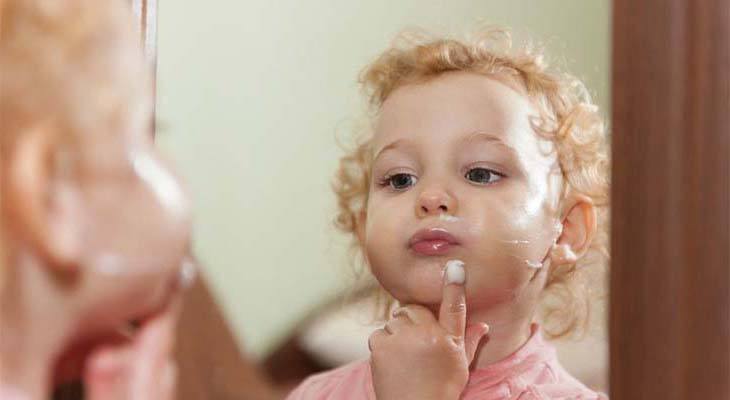
baby acne on face

There are many ways to use coconut oil for eczema, and it doesn’t necessarily need to be for babies only. Even adults with eczema can benefit from using coconut oil to get a little bit of eczema relief.

Here are some ways to use coconut oil for eczema:

  • Apply Directly to the Skin. The easiest way to use coconut oil is to apply it directly on the eczema-prone part of your body. Do this three times a day for better results.
  • Eat It with Your Food. The most effective way for coconut oil to work is to drink 2-4 tablespoons of it per day. But if you don’t feel comfortable drinking oil, you can always mix it with your food.
  • Make a Washable Soothing Mask. Mix 2 tablespoons of rosemary oil, 2 tablespoons of vitamin E oil, and 5 tablespoons of coconut oil together to create a soothing mask. Apply this on the eczema-prone parts of your skin and leave it on for 10 minutes. Rinse after use.

Coconut Oil for Eczema: Before and After

Like what was said before, coconut oil might not work for a number of different reasons. But with your pediatrician’s go signal, it can still help to try out this natural remedy. After all, it’s a very affordable and widely available solution.

Trying out coconut oil can be the difference between being more comfortable or uncomfortable daily, and for many people, it has been life-changing. Looking at before and after pictures of people with eczema might just be the motivation you need to try it out. So, don’t cross it off your list!


How Long Does It Take For Coconut Oil To Cure Eczema?

Don’t be discouraged if you don’t instantly see any difference once you start using coconut oil. How good it works can very well depend on how severe the flare-up is and your baby’s sensitivity to coconut itself.

It usually takes at least a month before you can see any visible difference, so be patient.

Is Baby Oil Good For Eczema?

Baby oil is a good side product when it comes to managing the symptoms of eczema. But don’t rely on it entirely. You can always add a few drops when taking a bath for more hydration but be sure to use gentle soaps and shampoos still.

Baby oil is created with mineral oil and fragrance. The former is a safe and effective moisturizer. But fragrance isn’t always that mild. So better get one that’s fragrance-free, at least!


via Tumblr Why Is Using Coconut Oil for The Baby Skin to Treat Eczema Is Effective?
List Price: $27.00 Price: $14.97 You Save: $12.03 List Price: $38.99 Price: $21.47 You Save: $17.52 List Price: $29.99 Price: $14.95 You Save: $15.04 List Price: $13.73 Price: $12.99 You Save: $0.74 List Price: $21.00 Price: $19.95 You Save: $1.05
0 Comments

How to Treat Baby Eczema With Safe Natural Remedies

4/22/2019

0 Comments


Read the original post How to Treat Baby Eczema With Safe Natural Remedies on BabyDotDot.

The hardest part of parenting is when your child keeps crying and hurting but you don’t know what to do with it. Are your little ones’ skins showing blemishes and signs of itching? You might want to learn about how to treat baby eczema with natural remedies and whatnot.

Home remedies for eczema in children is a great way to relieve the discomfort that it causes your baby, and is a step forward in their health journey to better wellbeing. Learning how to treat eczema means getting it diagnosed with your pediatrician, knowing more about eczema treatment, and discovering special lotions and oils that can help your little tyke feel a whole lot better.

Find out how to treat eczema naturally!

There can be many health triggers that can cause eczema, most common of which is allergies. That’s why it’s essential for you to know what those are for your baby so you can help narrow down the ingredients that will come in contact with his sensitive skin.

Most importantly, you will be able to determine which types of hygiene products you can use for him, like special soaps and detergents. But before you seek an eczema baby natural treatment or any other kind of eczema cure, you must first know what eczema actually is.

So, in this article, we’ll explore:

  • What is eczema?
  • Eczema symptoms
  • Eczema home remedies
  • Best baby eczema cream reviews
  • How to cure eczema permanently?
  • Best remedy for eczema
  • Eczema relief

What is Eczema?

jaggery for eczema

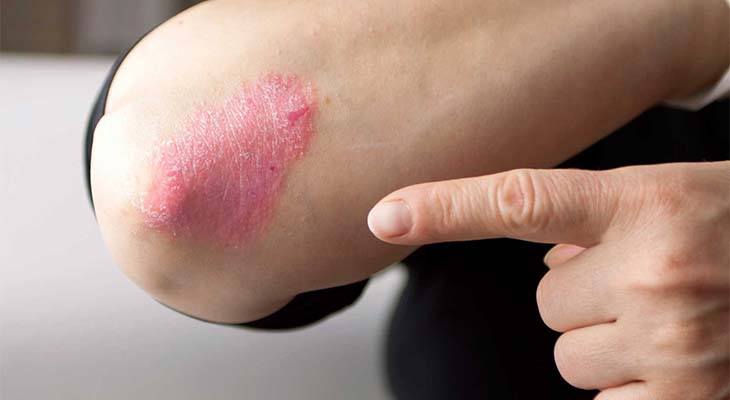
Eczema is the general name of a group of skin conditions that causes the skin to become itchy and inflamed, making it look red. There are six types of eczema:

  • Atopic dermatitis
  • Contact dermatitis
  • Dyshidrotic eczema
  • Nummular eczema
  • Seborrheic dermatitis
  • Stasis dermatitis

Eczema is actually very common in the United States, with over 30 million Americans inflicted by a certain form of eczema. It usually develops in babies and kids and can go away as they transition into adulthood.

However, adults can also develop eczema. Don’t worry. Eczema isn’t contagious and is highly manageable. There are many kinds of treatments available, may it be over the counter prescriptions or home remedies for eczema on legs and other parts of your baby’s body.

But before diving into that, you should know what to look out for if your little one might have eczema.

Eczema Symptoms

Knowing the symptoms can make maintaining your baby’s skin and health better overall. Here are some of the symptoms of eczema you need to look out for:

  • Extreme itchiness
  • Rough, scaly skin
  • Very inflamed and red skin
  • Dark patches of skin
  • Swelling

If you notice these things happening, get your baby diagnosed. The sooner that’s done, the sooner you can treat it.

Eczema Home Remedies

ghee for eczema

There are many natural ways to treat eczema. A natural remedy can range from a type of bath to a kind of diet. You can try coconut oil, sea spray, and magnesium baths as types of topical treatments to help alleviate the discomfort that comes with eczema. For supplements you can take to lessen the causes of eczema, you can try fermented cod oil, probiotics, and gelatin to name a few.

All you need to do is look into reputable online sites and try them out. Why not watch this video and discover how easy it is to make your own DIY eczema cream? This page by Wellness Mama can help you get started. Remember to clear anything you want to try with your doctor first to be absolutely safe.

Best Baby Eczema Cream Reviews

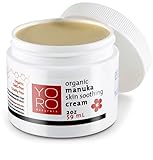
1. YoRo Naturals Organic Manuka Honey Baby Eczema Cream

Organic Manuka Honey Baby Eczema Cream, Psoriasis Cream, Rosacea Cream, Dermatitis Cream and Diaper Rash Cream | Gentle for Babies & Children, Creamy Balm Provides Instant Relief for Severe Dry Skin

If you don’t want to make a homemade cream but still want to use an organic product, this one by YoRo Naturals is a good alternative. This natural and GMO-free eczema cream is rich in soothing agents that is great as a diaper rash cream for your toddler or newborn.

It is thick and moisturizing without that oily and greasy feeling most creams and lotions are associated with. You can apply it on inflamed or severely dry skin and it will not burn or sting. That’s extremely helpful if your child’s skin already has open wounds.

Since it’s made up of Manuka Honey from New Zealand, you are guaranteed of its fantastic antibacterial properties that form healing protection from infection. It’s a great all-around rash cream and can even provide instant relief to small cuts and burns. Now that’s what you call a natural eczema treatment!

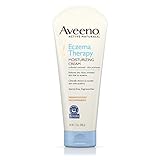
2. Aveeno Eczema Therapy Moisturizing Cream

Aveeno Eczema Therapy Moisturizing Cream For Sensitive Skin, 7.3 Oz

Another great product to try out is the Eczema Therapy cream produced by Aveeno. Aveeno is a skincare brand well-known for its high quality and high performing products. So, buying from this brand is a guarantee that you’re getting only the best treatment there is.

This moisturizing cream features ceramide, which is an essential lipid that the skin produces to enhance its own natural protective functions. It is also created with colloidal oatmeal which helps maintain and attract moisture to the skin so that it won’t dry too much. Aside from a regular oatmeal bath, this moisturizing cream can help soothe your baby’s dry and irritated skin.

Plus, it’s highly recommended by many dermatologists because it’s been clinically tested to work, and they know it’s gentle enough for your baby’s skin.

3. Mustela Stelatopia Emollient Cream

Mustela Stelatopia Emollient Cream, Daily Baby Cream for Extremely Dry to Eczema-Prone Skin, Fragrance Free, 6.76 Fl. Oz.

Mustela is another well-known skincare brand that you can trust. Its emollient cream and other products from the Eczema-Prone Skin Collection are enriched with Avocado which helps protect and give moisture to your baby’s dry and itchy skin. It is also formulated with sunflower oil which is known for maintaining a highly moisturized skin barrier and soothing the skin during flare-ups.

If you want a complete skincare routine that’s safe for your baby and is sensitive enough for his delicate condition, then try out the other products in Mustela’s Eczema-Prone Skin line.

4. Elizabeth Parker Naturals Calendula Ointment Baby Balm

Mustela Stelatopia Emollient Cream, Daily Baby Cream for Extremely Dry to Eczema-Prone Skin, Fragrance Free, 6.76 Fl. Oz.

The Calendula ointment is another natural product that you can try out if you want to lessen the effects of irritants on your baby’s skin. It is enriched with both honey and calendula which are known to soothe dry, itchy and irritated skin instantly.

It is also designed with beeswax which is a naturally occurring form of wax and relieve your little one’s rashes and skin irritation for maximum comforts. Plus, this product was created with only plant-based ingredients so you know it’s definitely safe and gentle enough for your baby.

Best of all, the calming properties of Lavender can help relax your sweet child before bedtime. With this product, you can provide a more holistic form of wellness for your baby.

5. Bee Real Skin Care Baby Aloe Cream with Manuka Honey

Baby Aloe Cream with Organic Manuka Honey (2 0z) Moisturizer for Moms, Toddlers, Kids – Rapid Natural Relief and Repair of Eczema, Rash, Stretch Marks, Sensitive, Itchy and Dry Skin by Bee Real

The last product on our list is another organic product that will definitely keep your baby’s skin happy and healthy. Bee Real makes products that are vegan, gluten-free, and non-comedogenic.

This cream is also free from artificial fragrances, parabens, sulfates, and phthalates so you’re guaranteed that most irritants will not be present.

It is excellent at soothing and calming the skin because of ingredients like organic Manuka Honey and Aloe Vera which are known for relieving itchy and sensitive skin. Plus, it has moisturizing properties so you don’t need to keep track of multiple skincare products.

How to Cure Eczema Permanently?

eczema cure diet

One question that’s very commonly asked is: how do you get rid of eczema?

The discomfort associated with eczema can be a huge problem for some people so it’s not surprising that many want to know how to cure eczema fast. Most medical practitioners will say that there is no cure for eczema. The only thing you need to do is to treat it.

While that may be true, eczema can be managed easily and that will help lessen the discomfort your baby feels. By adapting several lifestyle changes like using hygiene products specially formulated for sensitive skin, being more conscious of the diet your baby consumes and living in an area where environmental pollution is low, you can live an almost eczema-free life.

Best Remedy for Eczema

There is no one best remedy for eczema. Adapting to lifestyle changes is the easiest and most fool-proof way of treating eczema successfully. It is essential to make adjustments in diet and other everyday factors that can affect your baby.

Eczema Relief

Aside from the obvious benefits of getting rid of the itching, treating eczema also has other implications you need to keep in mind. The rashes and inflammation that eczema can cause in your child’s skin will be very visible and it will not look good.

By treating his eczema, you are also saving your baby from the trauma and low self-confidence that his skin condition might bring as he gets older. Not only does keeping eczema at bay relieve physical factors, but it can also alleviate possible emotional factors as well.


via Tumblr How to Treat Baby Eczema With Safe Natural Remedies
List Price: $19.95 Price: $19.95 List Price: $11.69 Price: $10.69 You Save: $1.00 List Price: $26.00 Price: $26.00 List Price: $26.00 Price: $26.00 List Price: $19.47 Price: $19.47
0 Comments

The Best Tactical Baby Carriers Review & Buying Guides

3/25/2019

0 Comments


Read the original post The Best Tactical Baby Carriers Review & Buying Guides on BabyDotDot.

When it comes to looking for a tactical baby carrier, most people would immediately think: “Oh, it must be the best baby carrier for dad!”

Well, it’s not just that.

While the utilitarian and gender-neutral look of a tactical baby carrier appeals to fathers, but moms can use it as well.

These baby carriers are usually made to be light, sturdy, practical and, most importantly, support caretaker and baby when setting out on their many adventures.

Also, a tactical carrier can keep your baby safe and close to you and leave your hands free.


Tactical Baby Carrier Reviews

tactical-daddy-baby-carrier


It’s not just about a camouflage baby carrier or a camouflage diaper bag. A tactical child carrier can offer you a lot of different functions.

A quality tactical carrier provides you with many different small storage spaces, a fantastic safety system for your baby, and so much more. It’s a baby travel gear that gives you hassle-free performance!

From desert camouflage to stealth black and of course, understated shades of navy and battle dress green, there are so many patterns of military baby carriers for you to choose.

So, in this article, we’ll explore:

  • Tactical Baby Gear Carrier Reviews
  • Mission Tactical Baby Carrier Reviews
  • Tactical Baby Carrier Backpack
  • Tactical Diaper Bags
  • Why Should You Buy a Tactical Carrier?
  • Different Types of Carriers
  • How to Buy A Tactical Baby Carrier
  • What to Remember When Using a Tactical Carrier
  • Baby Carrier, Ring Sling, Mei Tai & Carrier Covers


Tactical Baby Gear Carrier Reviews

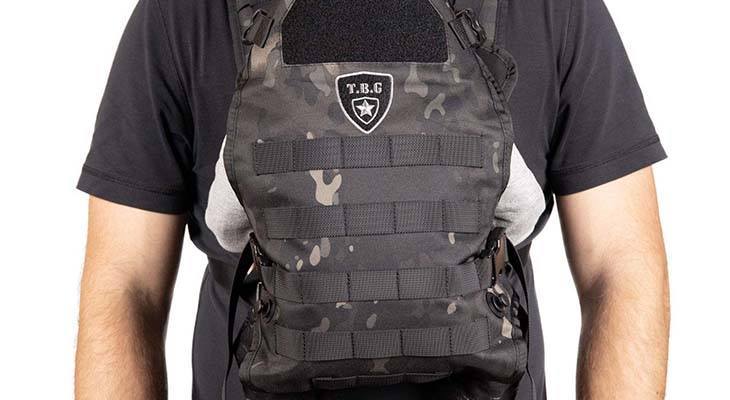
TBG Tactical Baby Carrier (Black Camo)

To clarify, Tactical Baby Gear is not a type of carrier but a brand, and it is one of the most preferred tactical carrier brands today.

If you’re looking for a carrier for dad, a tactical baby carrier from this brand would be a big hit.

Its compact design and ruggedness make it a manly baby carrier that every dad would want to have!

Plus, it’s Molle compatible and allows for multiple sitting positions. While it is only a front carry carrier, you can choose to face your baby in or out depending on his developmental stage.

It features UTX buckles and has military-like efficiency that will make any practical parent swoon with delight.

Absolutely love this carrier. I am usually concerned about fit because I’m a bigger guy (6’4”) and most carriers are made for more average sized humans. This carrier fits like a dream and the adjustability makes it size down to my wife super fast… – Karl E., Amazon

Tactical Baby Gear has a removable and washable liner for easy cleanups and has a Velcro front panel for your use.

Their carriers are available in four colors: Coyote Brown, Black, Black Camo, and Ranger Green.

NOTE: Tactical Baby Gear carriers are designed for babies weighing 8 lbs to 33 lbs only.


Mission Tactical Baby Carrier Reviews

Men's Baby Carrier - Front Baby Carrier - Baby Carrier for Dads - by Mission Critical - Black

Another excellent and well-known baby carrier brand you might want to check out is Mission Critical.

This camo baby carrier is an excellent choice for dads and all practical parents who want multiple carrying positions. You can use it as a front and rear facing carrier.

It is made from 1000D nylon which is a highly durable and near indestructible fabric so you know you can take on any adventure you and your baby will go to.

It features Molle webbing and a removable and washable liner that makes attaching accessories more accessible.

This baby carrier also has padded and perforated foam which makes use comfortable for daddy and mommy. It can even keep you cool.

Mission AWESOME!!! As a first time dad, it is obvious that the baby carrier “market” is focused on moms being happy with pretty colors and not much else. Mission critical took the time to design and engineer a product made to last and safely carry your child. … – Mark E., Amazon

The Mission Critical carrier also has a built-in sun shield for better sun protection for your baby.

It is available in three colors: Black, Coyote, and Gray.

NOTE: Mission Critical carriers are designed for babies weighing 8 lbs to 33 lbs only.

Want to know a dad’s real impression about the Mission Critical baby carrier? Watch this video:


Tactical Baby Carrier Backpack

When you have a child in tow, there are a lot of different bits and bobs you need to bring with you when you go out.

Usually, necessities like extra diapers, baby bottles, wipes, and etcetera will need their own bag.

A backpack helps you keeps your hands free even with all the different baby things you have to lug around. But baby backpacks can seem so cute and unmanly.

Good thing tactical baby backpacks are now a thing in the market!

Tactical Baby Gear Backpack

Tactical Baby Gear Daypack 3.0 Tactical Diaper Bag Backpack and Changing Mat (Black Camo)

The Tactical Baby Gear Daypack 3.0 is an excellent choice for the ever-practical parent. It has a very spacious main compartment where you can store all of your little one’s daily essentials like diapers and bottles.

It also has two exterior pockets that can fit you and your baby’s bottles for easy access. Plus, the three-tiered interior has many pockets for all your little baby things.

This backpack even has a built-in changing mat, so you don’t need to worry about forgetting yours when the need arises.

It also takes into account your comfort and features body contoured shoulder straps and closed-cell foam padding.

Wife and I love the bag. Plenty of room for everything you could possibly need. Overall neat setup and we were able to fit everything we wanted inside of it. The wipe bag works fine. Overall extremely satisfied with the purchase. – Christopher Miller, Amazon

The Daypack 3.0 is available in four colors: Black, Black Camo, Coyote Brown, and Ranger Green.


Mission Critical Backpack

Another excellent and well-known tactical backpack you might want to check out is Mission Critical.

The great thing about Mission Critical is that it has four different designs when it comes to their baby backpacks.

You can choose which look you want the best, or determine which type of backpack works best for you and your baby’s needs.

As such, here are the four Mission Critical backpacks available and their features:

S.01 Backpack
Mission Critical Diaper Bag Backpack - System 01 - Diaper Bag Backpack for the Intrepid Dad - Gray
  • One spacious main compartment with multiple interior pockets
  • Molle webbing for secure attachment of accessories
  • Zip side access makes it easy to reach the bottom of the bag
  • Padded, ergonomic shoulder straps
  • Large reverse-opening top
  • Made from 1000D nylon
  • Equipped with survival whistle
  • Available in three colors: Black, Gray, and Coyote


S.01 Daypack
Mission Critical S.01 Daypack Zip (Gray)
  • Can be connected to the S.01 Baby Carrier
  • Has a secure and straightforward Molle-interface panel
  • Padded, ergonomic shoulder straps
  • Sternum strap with survival whistle
  • Includes magnetic changing mat
  • External side pocket for easier access
  • Insulated bottle pocket


System02 Hiking Backpack
Mission Critical Backpack - System 02 - Hiking Backpack (Titanium)
  • Minimalist design perfect for exploring with your baby
  • Built-in survival whistle
  • Padded, ergonomic shoulder straps
  • Multiple pockets for better organization
  • Stretch mesh pocket for security
  • Water bladder sleeve for hydration system or laptop
  • Available in four colors: Adventure Red, Ocean Blue, Titanium, and Anthracite


S.01 Rolltop Backpack
Mission Critical S.01 Rolltop Backpack - Gray
  • Minimalist design for better packing efficiency and light traveling
  • Super lightweight and versatile
  • Central rolltop opening for fast access
  • Water bladder pocket for a hydration system
  • Interior and exterior zippered pockets for better organization
  • Padded, ergonomic shoulder straps
  • Equipped with survival whistle
  • Made from 1000D nylon
  • Available in three colors: Black, Gray, and Coyote


Tactical Diaper Bags

If you make an effort to look around, there are many camouflage diaper bags in the market.

But your best choice would still be a tactical diaper bag from these brands. They are handy, nicely design and most important very functional.

Tactical Baby Gear Diaper Bags

Tactical Baby Gear Full Load Out 2.0 Tactical Diaper Bag Set (Ranger Green)

Aside from backpacks and baby carriers, Tactical Baby Gear also produces diaper bags. Made from 600D materials, these bags are highly durable and water repellant.

It features a huge main compartment that has three spacious built-in front pockets. It is also created with YKK zippers and has a Molle webbing for easy attaching of accessories.

This diaper bag also uses a modular system designed to fit you and your baby’s needs better.

It also has a detachable, padded shoulder strap that will keep you comfortable when in use.

This diaper bag has exterior Velcro fields for patches.


Mission Critical Diaper Bag

Like their backpacks, Mission Critical allows you to choose between two different designs depending on your needs or preferences.

To help you choose which one to get, here are the two Mission Critical diaper bags and their features:

S.01 Diaper Bag
Mission Critical S.01 Diaper Bag (Black)
  • Focuses on comfort and convenience
  • Fast-clipping magnetic buckle
  • Padded, adjustable shoulder strap
  • Removable divider for baby essentials
  • On-the-go compartment access
  • Convenient top-entry zipper
  • Dedicated pockets for maximum protection
  • Made from 1000D nylon
  • Available in three colors: Black, Gray, and Coyote


System02 Diaper Bag
Mission Critical Diaper Bag - System 02 - Diaper Bag for Dads (Ocean Blue)
  • Sleek and versatile design
  • On-the-go compartment access
  • A surface-mounted buckle on the main compartment
  • Padded, ergonomic shoulder straps
  • Spacious main compartment
  • Has laptop sleeves and pockets for daddy or mommy’s needs
  • Front stash pockets for small essentials
  • Insulated side bottle pocket
  • Available in four colors: Adventure Red, Ocean Blue, Titanium, and Anthracite


Why Should You Buy a Tactical Carrier?

tbg-tactical-babies-carrier-review


There’s an easy answer to that question, and the fact that you’re reading this article means you probably have a good idea already.

The answer is that you have a baby to take care of, but you still want to be able to do your work at the same time.

A tactical baby carrier allows you to hold your baby while keeping your hands free for your other activities.

It’s like hitting two birds with one stone. You get to be close to your baby, and you can get your work done.

Now, there are many types of carriers in the market. There are also many kinds of tactical carriers out there.

To help you choose the best carrier for you, you should probably know a few technical terms being thrown about in the industry.

A MOLLE baby carrier refers to the design of the tactical carrier.

MOLLE is an acronym that stands for Modular Lightweight Load-carrying Equipment which is a type of storage equipment used by NATO armed forces.

Whereas a MultiCam baby carrier refers to the pattern used in the carrier’s fabric. MultiCam is the camouflage pattern made by Crye Precision that is used to help hide the wearer in environments and condition.

Both are tactical baby carriers that offer great support and use for dads all over the world.


Different Types of Carriers

Like what was stated above, there are different kinds of carriers you can choose depending on your needs and preferences.

To give you a few examples, here are three types that a hands-on dad might want to check out:

  • Military

A military baby carrier merges the innovative features of modern carriers with the functionality of a military-grade backpack.

This type of carrier is durable and versatile, making it a great choice for parents who love going on hikes and outdoor adventures.

For daddy, it’s also an excellent option if you’re looking for a decidedly masculine-looking baby carrier. Most military carriers come in varying shades of camo prints, from desert sand to black.

Most military carriers offer you multiple sitting positions but not all do. So make sure that you’re using the carrier correctly and that your baby is securely strapped in.

Want to see an example of a military baby carrier in action? Watch this video:


  • Tactical

Most will think that tactical baby carriers are just the same as military carriers, and with good reason.

Both types of carriers have the same features. However, a tactical carrier looks more urban and gender-neutral. It doesn’t usually have military-inspired features as well.

A tactical carrier is also versatile and includes a range of sitting options for your baby. It offers a broader range of movement and adaptability that allows the carrier to grow with your baby.

If you’re looking for a less rugged looking carrier for everyday use, then tactical carriers may be a better choice than the military ones.


  • Ergonomic

If you’re a dad who prefers functionality over aesthetic, then an ergonomic baby carrier is the way to go.

Most ergonomic carriers feature 3D mesh linings that provide comfort to both you and your baby. It also has multiple compartments for your baby’s immediate needs.

Another great thing about ergonomic carriers is that recent ones can also grow with your baby so it can prove to be a good investment.

But the best feature of this type of carrier is the lumbar support it provides.

You can carry your baby more comfortably for longer because of the innovative waist belts these carriers have. Waist belts distribute the weight onto your shoulders and hips.

Ergonomic carriers are great for leisurely walks and for activities that need your hands to be totally free.


How to Buy A Tactical Baby Carrier

camo-babies-carrier


Now that you know some of the types of baby carriers out there, the next thing to learn is how to actually pick the best carrier for you.

There are a few features that you should keep in mind when it comes to the best tactical baby carrier for dads (and moms!). Here are some of them:

  • Materials Used

Like in all baby products, you would want to ensure that all materials used in the carrier are safe for baby use.

Make sure that your child, especially if he’s a newborn, would not be exposed to chemical dyes and toxic ingredients.

Believe it or not, some carriers carrying these harmful materials are still manufactured. The easy way to check? Look for a carrier’s American or European Safety Standard certifications.

  • Adjustability

Adjustability isn’t a necessary feature but having an adjustable carrier can be beneficial for you. For one, they’re a good investment.

Adjustable carriers can grow with your baby, so he can use these kinds of carriers for longer as his developmental stages come and go.

Second is that you can switch up carrying positions when you get tired. Different carrying positions distribute the weight differently after all.

  • Carrier Fit

It’s a good idea to get a baby carrier that can provide you with better posture or at the very least, not worsen it.

The modern innovations in baby carrier production have given rise to ergonomic fit carriers that feature contoured straps and padded waist belts for better performance and more comfortable use.

  • Is the Fabric Washable?

Of course, you would want to re-use your baby carrier. And you would want to make sure that it’s clean when your baby uses it again and again.

For practicality’s sake, make sure you get a baby carrier that is machine washable. It makes for easier cleanup when your baby has an accident (and we know how often that might occur).

It’s best to wash your carriers with detergents that are deemed safe for your baby.

  • Style

Not many people look into the style of a baby carrier. But let’s face it. Everybody has their own preferences.

There’s a massive chance that you’re a dad who wants the baby carrier you’re going to use to look gender-neutral, at least.

You might be someone who hopes that the baby carrier looks smart rather than casual. So make sure to check out how it looks before buying.


What to Remember When Using a Tactical Carrier

These points may seem obvious to you, but it’s safer to reiterate the importance of making sure that these safety points are met when using a tactical baby carrier.

  • Make sure that all rings and buckles are well-adjusted and fixed.
  • Use the baby carrier the way it was designed
  • If it’s a front carrier, use it as such and so on.
  • Keep in mind the weight limits of the baby carrier, and follow it.
  • Make sure that nothing obstructs your baby’s face.


More Baby Carriers

A tactical baby carrier and types of carriers mentioned above are only a few of those available in the market today. There are many more to choose from, depending on the design, the brand, or the function you need.

It’s best to discover and learn about all your options before buying a baby carrier so that you get the best deal you can.

Want to discover more baby carriers? Check out this Best Tula Carrier article and you might just find what you’re looking for!

List Price: $125.00 Price: $125.00 List Price: $139.00 Price: Too low to display List Price: $145.00 Price: $135.00 You Save: $10.00 List Price: $109.00 Price: $109.00 List Price: $99.00 Price: $99.00 List Price: $89.00 Price: $89.00 List Price: $40.00 Price: $40.00 List Price: $238.00 Price: $225.00 You Save: $13.00 List Price: $99.00 Price: $99.00 List Price: $99.00 Price: $99.00


via Blogger The Best Tactical Baby Carriers Review & Buying Guides
0 Comments

The Best Tactical Baby Carriers Review & Buying Guides

3/25/2019

0 Comments


Read the original post The Best Tactical Baby Carriers Review & Buying Guides on BabyDotDot.

When it comes to looking for a tactical baby carrier, most people would immediately think: “Oh, it must be the best baby carrier for dad!”

Well, it’s not just that.

While the utilitarian and gender-neutral look of a tactical baby carrier appeals to fathers, but moms can use it as well.

These baby carriers are usually made to be light, sturdy, practical and, most importantly, support caretaker and baby when setting out on their many adventures.

Also, a tactical carrier can keep your baby safe and close to you and leave your hands free.

Tactical Baby Carrier Reviews

tactical-daddy-baby-carrier

It’s not just about a camouflage baby carrier or a camouflage diaper bag. A tactical child carrier can offer you a lot of different functions.

A quality tactical carrier provides you with many different small storage spaces, a fantastic safety system for your baby, and so much more. It’s a baby travel gear that gives you hassle-free performance!

From desert camouflage to stealth black and of course, understated shades of navy and battle dress green, there are so many patterns of military baby carriers for you to choose.

So, in this article, we’ll explore:

  • Tactical Baby Gear Carrier Reviews
  • Mission Tactical Baby Carrier Reviews
  • Tactical Baby Carrier Backpack
  • Tactical Diaper Bags
  • Why Should You Buy a Tactical Carrier?
  • Different Types of Carriers
  • How to Buy A Tactical Baby Carrier
  • What to Remember When Using a Tactical Carrier
  • Baby Carrier, Ring Sling, Mei Tai & Carrier Covers

Tactical Baby Gear Carrier Reviews

TBG Tactical Baby Carrier (Black Camo)

To clarify, Tactical Baby Gear is not a type of carrier but a brand, and it is one of the most preferred tactical carrier brands today.

If you’re looking for a carrier for dad, a tactical baby carrier from this brand would be a big hit.

Its compact design and ruggedness make it a manly baby carrier that every dad would want to have!

Plus, it’s Molle compatible and allows for multiple sitting positions. While it is only a front carry carrier, you can choose to face your baby in or out depending on his developmental stage.

It features UTX buckles and has military-like efficiency that will make any practical parent swoon with delight.

Absolutely love this carrier. I am usually concerned about fit because I’m a bigger guy (6’4”) and most carriers are made for more average sized humans. This carrier fits like a dream and the adjustability makes it size down to my wife super fast… – Karl E., Amazon

Tactical Baby Gear has a removable and washable liner for easy cleanups and has a Velcro front panel for your use.

Their carriers are available in four colors: Coyote Brown, Black, Black Camo, and Ranger Green.

NOTE: Tactical Baby Gear carriers are designed for babies weighing 8 lbs to 33 lbs only.

Mission Tactical Baby Carrier Reviews

Men's Baby Carrier - Front Baby Carrier - Baby Carrier for Dads - by Mission Critical - Black
Men’s Baby Carrier - Front Baby Carrier - Baby Carrier for Dads - by Mission Critical - Black

Another excellent and well-known baby carrier brand you might want to check out is Mission Critical.

This camo baby carrier is an excellent choice for dads and all practical parents who want multiple carrying positions. You can use it as a front and rear facing carrier.

It is made from 1000D nylon which is a highly durable and near indestructible fabric so you know you can take on any adventure you and your baby will go to.

It features Molle webbing and a removable and washable liner that makes attaching accessories more accessible.

This baby carrier also has padded and perforated foam which makes use comfortable for daddy and mommy. It can even keep you cool.

Mission AWESOME!!! As a first time dad, it is obvious that the baby carrier “market” is focused on moms being happy with pretty colors and not much else. Mission critical took the time to design and engineer a product made to last and safely carry your child. … – Mark E., Amazon

The Mission Critical carrier also has a built-in sun shield for better sun protection for your baby.

It is available in three colors: Black, Coyote, and Gray.

NOTE: Mission Critical carriers are designed for babies weighing 8 lbs to 33 lbs only.

Want to know a dad’s real impression about the Mission Critical baby carrier? Watch this video:


Tactical Baby Carrier Backpack

When you have a child in tow, there are a lot of different bits and bobs you need to bring with you when you go out.

Usually, necessities like extra diapers, baby bottles, wipes, and etcetera will need their own bag.

A backpack helps you keeps your hands free even with all the different baby things you have to lug around. But baby backpacks can seem so cute and unmanly.

Good thing tactical baby backpacks are now a thing in the market!

Tactical Baby Gear Backpack

Tactical Baby Gear Daypack 3.0 Tactical Diaper Bag Backpack and Changing Mat (Black Camo)

The Tactical Baby Gear Daypack 3.0 is an excellent choice for the ever-practical parent. It has a very spacious main compartment where you can store all of your little one’s daily essentials like diapers and bottles.

It also has two exterior pockets that can fit you and your baby’s bottles for easy access. Plus, the three-tiered interior has many pockets for all your little baby things.

This backpack even has a built-in changing mat, so you don’t need to worry about forgetting yours when the need arises.

It also takes into account your comfort and features body contoured shoulder straps and closed-cell foam padding.

Wife and I love the bag. Plenty of room for everything you could possibly need. Overall neat setup and we were able to fit everything we wanted inside of it. The wipe bag works fine. Overall extremely satisfied with the purchase. – Christopher Miller, Amazon

The Daypack 3.0 is available in four colors: Black, Black Camo, Coyote Brown, and Ranger Green.

Mission Critical Backpack

Another excellent and well-known tactical backpack you might want to check out is Mission Critical.

The great thing about Mission Critical is that it has four different designs when it comes to their baby backpacks.

You can choose which look you want the best, or determine which type of backpack works best for you and your baby’s needs.

As such, here are the four Mission Critical backpacks available and their features:

S.01 Backpack
Mission Critical Diaper Bag Backpack - System 01 - Diaper Bag Backpack for the Intrepid Dad - Gray
  • One spacious main compartment with multiple interior pockets
  • Molle webbing for secure attachment of accessories
  • Zip side access makes it easy to reach the bottom of the bag
  • Padded, ergonomic shoulder straps
  • Large reverse-opening top
  • Made from 1000D nylon
  • Equipped with survival whistle
  • Available in three colors: Black, Gray, and Coyote
S.01 Daypack
Mission Critical S.01 Daypack Zip (Gray)
  • Can be connected to the S.01 Baby Carrier
  • Has a secure and straightforward Molle-interface panel
  • Padded, ergonomic shoulder straps
  • Sternum strap with survival whistle
  • Includes magnetic changing mat
  • External side pocket for easier access
  • Insulated bottle pocket


System02 Hiking Backpack
Mission Critical Backpack - System 02 - Hiking Backpack (Titanium)
  • Minimalist design perfect for exploring with your baby
  • Built-in survival whistle
  • Padded, ergonomic shoulder straps
  • Multiple pockets for better organization
  • Stretch mesh pocket for security
  • Water bladder sleeve for hydration system or laptop
  • Available in four colors: Adventure Red, Ocean Blue, Titanium, and Anthracite
S.01 Rolltop Backpack
Mission Critical S.01 Rolltop Backpack - Gray
  • Minimalist design for better packing efficiency and light traveling
  • Super lightweight and versatile
  • Central rolltop opening for fast access
  • Water bladder pocket for a hydration system
  • Interior and exterior zippered pockets for better organization
  • Padded, ergonomic shoulder straps
  • Equipped with survival whistle
  • Made from 1000D nylon
  • Available in three colors: Black, Gray, and Coyote


Tactical Diaper Bags

If you make an effort to look around, there are many camouflage diaper bags in the market.

But your best choice would still be a tactical diaper bag from these brands. They are handy, nicely design and most important very functional.

Tactical Baby Gear Diaper Bags

Tactical Baby Gear Full Load Out 2.0 Tactical Diaper Bag Set (Ranger Green)

Aside from backpacks and baby carriers, Tactical Baby Gear also produces diaper bags. Made from 600D materials, these bags are highly durable and water repellant.

It features a huge main compartment that has three spacious built-in front pockets. It is also created with YKK zippers and has a Molle webbing for easy attaching of accessories.

This diaper bag also uses a modular system designed to fit you and your baby’s needs better.

It also has a detachable, padded shoulder strap that will keep you comfortable when in use.

This diaper bag has exterior Velcro fields for patches.

Mission Critical Diaper Bag

Like their backpacks, Mission Critical allows you to choose between two different designs depending on your needs or preferences.

To help you choose which one to get, here are the two Mission Critical diaper bags and their features:

S.01 Diaper Bag
Mission Critical S.01 Diaper Bag (Black)
  • Focuses on comfort and convenience
  • Fast-clipping magnetic buckle
  • Padded, adjustable shoulder strap
  • Removable divider for baby essentials
  • On-the-go compartment access
  • Convenient top-entry zipper
  • Dedicated pockets for maximum protection
  • Made from 1000D nylon
  • Available in three colors: Black, Gray, and Coyote
System02 Diaper Bag
Mission Critical Diaper Bag - System 02 - Diaper Bag for Dads (Ocean Blue)
  • Sleek and versatile design
  • On-the-go compartment access
  • A surface-mounted buckle on the main compartment
  • Padded, ergonomic shoulder straps
  • Spacious main compartment
  • Has laptop sleeves and pockets for daddy or mommy’s needs
  • Front stash pockets for small essentials
  • Insulated side bottle pocket
  • Available in four colors: Adventure Red, Ocean Blue, Titanium, and Anthracite


Why Should You Buy a Tactical Carrier?

tbg-tactical-babies-carrier-review

There’s an easy answer to that question, and the fact that you’re reading this article means you probably have a good idea already.

The answer is that you have a baby to take care of, but you still want to be able to do your work at the same time.

A tactical baby carrier allows you to hold your baby while keeping your hands free for your other activities.

It’s like hitting two birds with one stone. You get to be close to your baby, and you can get your work done.

Now, there are many types of carriers in the market. There are also many kinds of tactical carriers out there.

To help you choose the best carrier for you, you should probably know a few technical terms being thrown about in the industry.

A MOLLE baby carrier refers to the design of the tactical carrier.

MOLLE is an acronym that stands for Modular Lightweight Load-carrying Equipment which is a type of storage equipment used by NATO armed forces.

Whereas a MultiCam baby carrier refers to the pattern used in the carrier’s fabric. MultiCam is the camouflage pattern made by Crye Precision that is used to help hide the wearer in environments and condition.

Both are tactical baby carriers that offer great support and use for dads all over the world.

Different Types of Carriers

Like what was stated above, there are different kinds of carriers you can choose depending on your needs and preferences.

To give you a few examples, here are three types that a hands-on dad might want to check out:

  • Military

A military baby carrier merges the innovative features of modern carriers with the functionality of a military-grade backpack.

This type of carrier is durable and versatile, making it a great choice for parents who love going on hikes and outdoor adventures.

For daddy, it’s also an excellent option if you’re looking for a decidedly masculine-looking baby carrier. Most military carriers come in varying shades of camo prints, from desert sand to black.

Most military carriers offer you multiple sitting positions but not all do. So make sure that you’re using the carrier correctly and that your baby is securely strapped in.

Want to see an example of a military baby carrier in action? Watch this video:

  • Tactical

Most will think that tactical baby carriers are just the same as military carriers, and with good reason.

Both types of carriers have the same features. However, a tactical carrier looks more urban and gender-neutral. It doesn’t usually have military-inspired features as well.

A tactical carrier is also versatile and includes a range of sitting options for your baby. It offers a broader range of movement and adaptability that allows the carrier to grow with your baby.

If you’re looking for a less rugged looking carrier for everyday use, then tactical carriers may be a better choice than the military ones.

  • Ergonomic

If you’re a dad who prefers functionality over aesthetic, then an ergonomic baby carrier is the way to go.

Most ergonomic carriers feature 3D mesh linings that provide comfort to both you and your baby. It also has multiple compartments for your baby’s immediate needs.

Another great thing about ergonomic carriers is that recent ones can also grow with your baby so it can prove to be a good investment.

But the best feature of this type of carrier is the lumbar support it provides.

You can carry your baby more comfortably for longer because of the innovative waist belts these carriers have. Waist belts distribute the weight onto your shoulders and hips.

Ergonomic carriers are great for leisurely walks and for activities that need your hands to be totally free.

How to Buy A Tactical Baby Carrier

camo-babies-carrier

Now that you know some of the types of baby carriers out there, the next thing to learn is how to actually pick the best carrier for you.

There are a few features that you should keep in mind when it comes to the best tactical baby carrier for dads (and moms!). Here are some of them:

  • Materials Used

Like in all baby products, you would want to ensure that all materials used in the carrier are safe for baby use.

Make sure that your child, especially if he’s a newborn, would not be exposed to chemical dyes and toxic ingredients.

Believe it or not, some carriers carrying these harmful materials are still manufactured. The easy way to check? Look for a carrier’s American or European Safety Standard certifications.

  • Adjustability

Adjustability isn’t a necessary feature but having an adjustable carrier can be beneficial for you. For one, they’re a good investment.

Adjustable carriers can grow with your baby, so he can use these kinds of carriers for longer as his developmental stages come and go.

Second is that you can switch up carrying positions when you get tired. Different carrying positions distribute the weight differently after all.

  • Carrier Fit

It’s a good idea to get a baby carrier that can provide you with better posture or at the very least, not worsen it.

The modern innovations in baby carrier production have given rise to ergonomic fit carriers that feature contoured straps and padded waist belts for better performance and more comfortable use.

  • Is the Fabric Washable?

Of course, you would want to re-use your baby carrier. And you would want to make sure that it’s clean when your baby uses it again and again.

For practicality’s sake, make sure you get a baby carrier that is machine washable. It makes for easier cleanup when your baby has an accident (and we know how often that might occur).

It’s best to wash your carriers with detergents that are deemed safe for your baby.

  • Style

Not many people look into the style of a baby carrier. But let’s face it. Everybody has their own preferences.

There’s a massive chance that you’re a dad who wants the baby carrier you’re going to use to look gender-neutral, at least.

You might be someone who hopes that the baby carrier looks smart rather than casual. So make sure to check out how it looks before buying.

What to Remember When Using a Tactical Carrier

These points may seem obvious to you, but it’s safer to reiterate the importance of making sure that these safety points are met when using a tactical baby carrier.

  • Make sure that all rings and buckles are well-adjusted and fixed.
  • Use the baby carrier the way it was designed
  • If it’s a front carrier, use it as such and so on.
  • Keep in mind the weight limits of the baby carrier, and follow it.
  • Make sure that nothing obstructs your baby’s face.

More Baby Carriers

A tactical baby carrier and types of carriers mentioned above are only a few of those available in the market today. There are many more to choose from, depending on the design, the brand, or the function you need.

It’s best to discover and learn about all your options before buying a baby carrier so that you get the best deal you can.

Want to discover more baby carriers? Check out this Best Tula Carrier article and you might just find what you’re looking for!


via Tumblr The Best Tactical Baby Carriers Review & Buying Guides
List Price: $125.00 Price: $125.00 List Price: $139.00 Price: Too low to display List Price: $145.00 Price: $135.00 You Save: $10.00 List Price: $109.00 Price: $109.00 List Price: $99.00 Price: $99.00 List Price: $89.00 Price: $89.00 List Price: $40.00 Price: $40.00 List Price: $238.00 Price: $225.00 You Save: $13.00 List Price: $99.00 Price: $99.00 List Price: $99.00 Price: $99.00
0 Comments

The Best Tula Baby Carriers to Buy (Reviews & Buyers Guide)

3/9/2019

0 Comments


Read the original post The Best Tula Baby Carriers to Buy (Reviews & Buyer’s Guide) on BabyDotDot.

Nowadays, carriers are an essential accessory to have when taking care of your child. The Tula carrier is a great choice to get and we’ll be discussing the best Tula carrier in this post.

It’s one of the most well-known brands today because of its so easy to use. Some parents love it so much that they even buy multiple.

But why need a baby carrier if you already have a stroller?

For one thing, a carrier allows your baby to be safe with you and still provide you with a hands-free choice.

And let’s face it. Babies love to be carried. It’s a kind of bonding activity for you both. There’s very likely that you’ll be carrying your child from when he’s born up until he’s 4-years-old (or more).

After reading this article, you will know:

  • More about the brand – Tula
  • The different kinds of Tula carriers
  • What the best Tula baby carrier is for you
  • How to buy the perfect baby carrier for you and your baby
  • And many more

How to Read this Article

If you are a new parent:

  • Understand why a baby carrier is important
  • Learn how to buy your first Tula infant carrier

If you are an experienced parent:

  • Discover why Tula is one of the best brands to choose
  • Know which kind of carrier fits your needs the most

If you are a friend of someone who has a baby:

  • Help look for the best Tula carrier for your friend
  • Check out which Tula carrier to give as a gift

If you just want to gather information about Tula carriers:

  • Read on to learn more about why other parents love and swear by their Tula carriers!


Discover the Best Tula Baby Carrier

There are a few different kinds of baby carriers that you can purchase from Tula.

In fact, there are a few different kinds of baby carriers in general. Get one depending on what you need.

For example, you can get a standard baby carrier that has the typical design you see in-stores. Or you can also buy a Tula baby wrap for a less structured experience.

You can also divide baby carriers depending on your baby’s age, so a Tula infant carrier is great for when he’s younger while a Tula toddler carrier is better for when he’s about 2 years old and above.

To help you choose which carrier to get, you can read a few of the Tula baby carrier reviews below. Check out the buying guide for more information as well.

On this page, learn:

The Best Tula Carriers – Product Reviews

  • Tula Standard Ergonomic Carrier
  • Tula Free To Grow Carrier
  • Tula Coast Carrier

Tula Carrier Guide

  • Factors To Consider When Buying A Baby Carrier
  • What Is Tula?
  • Tula Standard Vs. Toddler
  • Ergo Baby Vs. Tula Carriers
  • Standard Tula Weight Limit
  • How Much Is a Tula Carrier?
  • How to Wash a Tula?


Tula Standard Ergonomic Carrier

tula-free-to-grow-carrier-review

The Standard carrier is Tula’s original design range.  It was created to be easy to use, and for your daily baby carrying purposes.

The Standard carrier can be used for newborns to toddlers. This carrier also has a removable hood, pocket storage, and breastfeeding ability for extra convenience.

Here is one of the best Tula standard ergonomic carrier:

Tula Ergonomic Carrier, Betty-Standard Size (Baby)

Baby Tula Multi-Position, Ergonomic Baby Carrier, Front and Back Carry for 15 – 45 pounds – Betty

Even though this is the first ever design Tula released (and they have released a lot of improved designs), the Standard is still a high quality baby carrier you should try out.

It is made with 100% cotton and can be used as a front facing or back carry.

It supports your baby’s body with its ergonomic M-Position seat for better physical and hip development.

This carrier can accommodate babies weighing 15-45 pounds, and even ones as light as 7 pounds if you use an insert.

…the elastic bands on the end of each strap are a surprisingly exciting feature. Since the straps are so long to allow it to fit so many different body types… – Sarah Jones, Amazon

Not only that, mommy and daddy will have a better and comfier time wearing this carrier since it has a wide padded waistband as well as dual-adjustment padded straps.

The Betty Standard features a retro design that makes your baby carrier stylish and funky. It shows black fabric with white polka dots and cherry prints all over.

You should also check out these awesome patterns: Looking For Helpers and Bliss Bouquet.


Tula Free to Grow Baby Carrier

Why are most parents going gaga over the Free-to-Grow carrier?

Simple! It’s a great deal!

Not only is this carrier easy to use but it also allows you to transition from using it for your newborn up until he grows into a toddler.

It also offers multiple inward facing positions for you to choose from.

This carrier also has a removable hood, pocket storage, and breastfeeding ability.

Here is one of the best Tula Free to Grow Baby carrier:

Tula Ergonomic Carrier Free to Grow – Blossom

Tula Ergonomic Carrier - Blossom, Navy/Pink, Free To Grow

One of the more recent designs of Tula is the Free-to-Grow carrier, and it is aptly named.

The primary function of this excellent baby carrier is that you can use it for your newborn until he grows up to become a toddler.

That’s such a money-saving quality!

It is also made from 100% cotton, as well as breathable and lightweight twill fabric. Whether it’s hot out or not, you and your baby will feel cool.

The ergonomic design of the carrier promotes hip and spine development as well.

After using this for about six months I still use it daily and is just as important to me as my purse (or in my current stage of life, my diaper bag). – JennK, Amazon

The Blossom Free-to-Grow features a stunning navy blue fabric with white polka dots and floral patterns. It is classic and dainty at the same time.

You can also look into these dashing designs: Discover and Indigo.


Tula Coast Carrier

Another design from Tula is their coast carrier.

Unlike the other two designs, this one isn’t from the main line. Instead, it is a carrier that uses a different type of fabric.

It has the same innovative features of the other Tula carriers, like the ergonomic design as well as being easy to use.

Baby Tula Free-to-Grow Coast Mesh Baby Carrier


Baby Tula Free-to-Grow Coast Mesh Baby Carrier, Adjustable Newborn to Toddler Carrier, Ergonomic and Multiple Positions for 7 – 45 pounds – Coast Overcast (Light Gray with Light Gray Mesh Panel)

The main difference between the Coast Carrier and the other Tula carriers is the fabric used for it.

It features an innovative mesh body panel that allows you to support your baby from day 1 up to his toddler days without needing any insert.

It can also accommodate front and back carry for more comfortable positions that improve your baby’s development.

That’s not to mention that is has a wide padded waistband and dual-adjustment padded straps to make mommy and daddy comfy while using it.

The mesh on this one is actually breathable! I do not like the thick “3d” mesh they claim is better. This one is just a plain old mesh panel and it’s thin (but strong) and has fantastic air flow. – Lee, Amazon

The Overcast Coast carrier features an adorable, gender-neutral light gray color that can match with any outfit.

You can also check out these other designs: Electric Leaves and Hyacinth.


Factors to Consider When Buying a Baby Carrier

best-baby-carrier-for-dad

Aside from reading a Tula carrier review, it also pays to know certain factors and features that make one baby carrier perform better than others.

It’s not only about being stylish, after all. You should also consider the quality and care that has been put into the designing and making of the child carrier you’re choosing.

Is it safe? Is it comfortable? Is it adjustable? Is it Mom-approved?

See, there are lots of questions you need to be answered before buying your carrier.

  • Ergonomics and Design

The design of your baby carrier is crucial since it dictates the ease of use, comfort, and pretty much everything you will experience with it.

You should probably choose one that is ergonomically designed.

Getting a properly designed carrier is beneficial to your well-being, as well as your baby’s comfort and development.

You will want a baby carrier that encourages your newborn baby to have a ‘C Spinal alignment’ with his legs tucked up to help minimize the pressure in his hips and spine.

In that position, it can also promote better digestion as well as a sense of calm.

You should also make sure that your baby’s bum and hamstrings are adequately supported by ensuring that his legs aren’t dangling dangerously.

Finally, the carrier’s design should be able to provide you with back, neck, hip, and shoulder comfort.

Some features that provide these are criss-cross straps and wide waist belts.

  • Versatility of Design

For more efficiency and a better deal, you should probably get a baby carrier that can offer you different carrying positions.

Nowadays, one carrier can have a six-position feature so you don’t need to choose only front-facing or back-facing.

You should also get one that can grow together with your baby, from being a newborn to a toddler. This kind of carrier allows you to use it as soon as your baby’s born up until he’s about 4 years old.

  • Safety & Reliability

If there’s one very critical feature you need to research on, it’s your baby carrier’s ability to keep your baby safe while you’re using it.

Check the quality of the materials they’re using. Make sure that each stitch, buckle, zipping, clips, and Velcro are sturdy enough.

You should also consider the breathability of the fabric used.

The last thing you want is for your baby to have an accident because of the baby carrier you bought.

  • Ease of Use

Sure that carrier looks super chic, and that one feels really comfy.

But both of them just have too many straps, buckles, and whatnot that you might get lost in. Don’t settle for those!

Ease of use is another worthy feature that you should keep in mind.

Look for a carrier whose design you like, is comfortable, and can quickly be put on and off without harming your baby and you.

  • Comfort

Some baby carriers are marketed as more environmentally friendly, easy to use, and etcetera. But you should make room for comfort when it comes to the one you choose.

Remember that your baby will be staying in your carrier for long periods of time. He should be able to develop properly and have a nice time regardless.

Make sure that all the essential places in your carrier are padded. Your baby should also be able to breathe comfortably.

  • Price

The cost of a baby carrier varies widely in the market today. It’s possible for you to be able to buy one as low as $50 and another one for a whopping $400 or more.

The good news? More doesn’t mean better, in this case. However, less isn’t more as well.

There are baby carriers in the $100-$150 price range that can work perfectly for you.


What Is Tula?

tula-explore

Tula, as you might have surmised now, is a brand of ergonomic baby carriers that are very popular nowadays.

They use canvas as well as brightly colored and patterned European textiles for their products.

The Tula baby carriers come in two sizes: standard and toddler. They can also be divided into two weight classes: 15-15 pounds and 25-50 pounds.

Want to try another type of babywearing product? Watch this video to learn more about baby wraps: BABY WEARING HOW TO! (+Mini Review)


Tula Standard vs. Toddler

Alright, now that you know that Tula carries two sizes, what do you get?

The Standard is their baby-sized carrier.

If your baby is 7-15 pounds, Tula highly recommends using their Baby Tula Infant Insert.

The Toddler is the brand’s toddler-sized carrier. It’s not for newborn use, and Tula suggests using it for kids 18 months and above.

To keep it simple:

Standard Carrier

  • Newborn-toddler age
  • 15-45 pounds
  • Must use Baby Tula Infant Insert for 7-15 pounds

Toddler Carrier

  • 18 months old and above
  • 25-60 pounds
  • Not for newborn use

But your child is less than 18 months old but is over 25 pounds, what do you get then?

I suggest that you get the Toddler carrier. Your baby will still comfortably fit the Standard. However, you will feel less strain if you carry him in a Toddler one.


Ergo Baby vs. Tula Carriers

If you’ve done other baby carrier brand research, you would know that most parents choose between Tula and Ergo Baby.

Ergo Baby, for those of you who do not know yet, is another favorite and high-quality baby carrier brand.

But if they’re both famous and made of high-quality materials, which do you choose?

To help you weigh your options, just read on below:

Ergo Baby

  • Ergonomic design
  • Available in 3 different models (360, Performance, and Original)
  • A wide range of solid colors
  • Can carry up to 45 pounds
  • Has multiple-position functionality

Tula Carrier

  • Ergonomic design
  • Available in 4 different designs (42) (Explore, Free-to-Grow, Standard, and Toddler)
  • A wide range of colors and patterns
  • Can carry up to 60 pounds (for Toddler)
  • Has multiple-position functionality

Want to see more comparisons? Watch this video:


Standard Tula Weight Limit

Like most baby carriers, even Tula has a weight limit. This is put in place to ensure that your baby stays safe always.

The weight limits in Tula carriers vary depending on their design.

Tula Weight Limit

Explore: 7-45 pounds (Newborn-Toddler)

Free-to-Grow: 7-45 pounds (Newborn-Toddler)

Standard: 15-45 pounds (Newborn-Toddler) *needs insert for babies 7 – 15 pounds

Toddler: 25-60 pounds (Toddler 18 months+)


How Much is A Tula Carrier?

Each Tula Carrier design differs in price. Here is a rough estimate on how much each cost.

  • Explore: $179.00
  • Free-to-Grow: $149.00 – $159.00
  • Standard: $139.00
  • Toddler: $169.00
  • Tula Infant Insert: $40.00


How to Wash a Tula?

Each different type of Tula carrier has its own sets of washing and care instructions. So, make sure to follow whatever is on its reference tag to get the most use out of your carriers.

Before tackling each carrier, you should note: Don’t use fabric softeners, detergents with brighteners, or bleach on your Tula carriers.

Explore Carrier

  • Don’t bleach, dry clean, iron.
  • Machine wash cold.
  • Line dry.
  • Don’t use detergents with perfumes, bleach, dyes, chlorine, or brighteners.

Free-to-Grow Carrier

  • Don’t bleach, tumble dry, iron, dry clean.
  • Machine wash cold.
  • Don’t use detergents with perfumes, bleach, dyes, chlorine, or brighteners.

Standard & Toddler Carrier

  • Spot clean with soft cloth, soap, & warm water
  • Machine wash cold, on delicate cycle (only when necessary).
  • Use only mild detergent
  • Air dry.

Now, you more about Tula but this brand  isn’t the only baby carrier brand in the world. There are lots to choose from!

So, if you didn’t find one that fits your needs in this list, don’t despair. There are still other types of carriers out there to look into.

Aside from Tula carrier models, you can even broaden your search! Don’t just stop with Tula toddler carrier reviews.

You can check out different designs like ring slings, or different uses like special carriers for hiking and whatnot.

List Price: $69.95 Price: $69.95 List Price: $159.00 List Price: $149.00 Price: $149.00


via Blogger The Best Tula Baby Carriers to Buy (Reviews & Buyer’s Guide)
0 Comments

The Best Tula Baby Carriers to Buy (Reviews & Buyers Guide)

3/9/2019

0 Comments


Read the original post The Best Tula Baby Carriers to Buy (Reviews & Buyer’s Guide) on BabyDotDot.

Nowadays, carriers are an essential accessory to have when taking care of your child. The Tula carrier is a great choice to get and we’ll be discussing the best Tula carrier in this post.

It’s one of the most well-known brands today because of its so easy to use. Some parents love it so much that they even buy multiple.

But why need a baby carrier if you already have a stroller?

For one thing, a carrier allows your baby to be safe with you and still provide you with a hands-free choice.

And let’s face it. Babies love to be carried. It’s a kind of bonding activity for you both. There’s very likely that you’ll be carrying your child from when he’s born up until he’s 4-years-old (or more).

After reading this article, you will know:

  • More about the brand – Tula
  • The different kinds of Tula carriers
  • What the best Tula baby carrier is for you
  • How to buy the perfect baby carrier for you and your baby
  • And many more

How to Read this Article

If you are a new parent:

  • Understand why a baby carrier is important
  • Learn how to buy your first Tula infant carrier

If you are an experienced parent:

  • Discover why Tula is one of the best brands to choose
  • Know which kind of carrier fits your needs the most

If you are a friend of someone who has a baby:

  • Help look for the best Tula carrier for your friend
  • Check out which Tula carrier to give as a gift

If you just want to gather information about Tula carriers:

  • Read on to learn more about why other parents love and swear by their Tula carriers!

Discover the Best Tula Baby Carrier

There are a few different kinds of baby carriers that you can purchase from Tula.

In fact, there are a few different kinds of baby carriers in general. Get one depending on what you need.

For example, you can get a standard baby carrier that has the typical design you see in-stores. Or you can also buy a Tula baby wrap for a less structured experience.

You can also divide baby carriers depending on your baby’s age, so a Tula infant carrier is great for when he’s younger while a Tula toddler carrier is better for when he’s about 2 years old and above.

To help you choose which carrier to get, you can read a few of the Tula baby carrier reviews below. Check out the buying guide for more information as well.

On this page, learn:

The Best Tula Carriers – Product Reviews

  • Tula Standard Ergonomic Carrier
  • Tula Free To Grow Carrier
  • Tula Coast Carrier

Tula Carrier Guide

  • Factors To Consider When Buying A Baby Carrier
  • What Is Tula?
  • Tula Standard Vs. Toddler
  • Ergo Baby Vs. Tula Carriers
  • Standard Tula Weight Limit
  • How Much Is a Tula Carrier?
  • How to Wash a Tula?

Tula Standard Ergonomic Carrier

tula-free-to-grow-carrier-review

The Standard carrier is Tula’s original design range.  It was created to be easy to use, and for your daily baby carrying purposes.

The Standard carrier can be used for newborns to toddlers. This carrier also has a removable hood, pocket storage, and breastfeeding ability for extra convenience.

Here is one of the best Tula standard ergonomic carrier:

Tula Ergonomic Carrier, Betty-Standard Size (Baby)

Baby Tula Multi-Position, Ergonomic Baby Carrier, Front and Back Carry for 15 – 45 pounds – Betty

Even though this is the first ever design Tula released (and they have released a lot of improved designs), the Standard is still a high quality baby carrier you should try out.

It is made with 100% cotton and can be used as a front facing or back carry.

It supports your baby’s body with its ergonomic M-Position seat for better physical and hip development.

This carrier can accommodate babies weighing 15-45 pounds, and even ones as light as 7 pounds if you use an insert.

…the elastic bands on the end of each strap are a surprisingly exciting feature. Since the straps are so long to allow it to fit so many different body types… – Sarah Jones, Amazon

Not only that, mommy and daddy will have a better and comfier time wearing this carrier since it has a wide padded waistband as well as dual-adjustment padded straps.

The Betty Standard features a retro design that makes your baby carrier stylish and funky. It shows black fabric with white polka dots and cherry prints all over.

You should also check out these awesome patterns: Looking For Helpers and Bliss Bouquet.

Tula Free to Grow Baby Carrier

Why are most parents going gaga over the Free-to-Grow carrier?

Simple! It’s a great deal!

Not only is this carrier easy to use but it also allows you to transition from using it for your newborn up until he grows into a toddler.

It also offers multiple inward facing positions for you to choose from.

This carrier also has a removable hood, pocket storage, and breastfeeding ability.

Here is one of the best Tula Free to Grow Baby carrier:

Tula Ergonomic Carrier Free to Grow – Blossom

Tula Ergonomic Carrier - Blossom, Navy/Pink, Free To Grow

One of the more recent designs of Tula is the Free-to-Grow carrier, and it is aptly named.

The primary function of this excellent baby carrier is that you can use it for your newborn until he grows up to become a toddler.

That’s such a money-saving quality!

It is also made from 100% cotton, as well as breathable and lightweight twill fabric. Whether it’s hot out or not, you and your baby will feel cool.

The ergonomic design of the carrier promotes hip and spine development as well.

After using this for about six months I still use it daily and is just as important to me as my purse (or in my current stage of life, my diaper bag). – JennK, Amazon

The Blossom Free-to-Grow features a stunning navy blue fabric with white polka dots and floral patterns. It is classic and dainty at the same time.

You can also look into these dashing designs: Discover and Indigo.

Tula Coast Carrier

Another design from Tula is their coast carrier.

Unlike the other two designs, this one isn’t from the main line. Instead, it is a carrier that uses a different type of fabric.

It has the same innovative features of the other Tula carriers, like the ergonomic design as well as being easy to use.

Baby Tula Free-to-Grow Coast Mesh Baby Carrier

Baby Tula Free-to-Grow Coast Mesh Baby Carrier, Adjustable Newborn to Toddler Carrier, Ergonomic and Multiple Positions for 7 – 45 pounds – Coast Overcast (Light Gray with Light Gray Mesh Panel)

The main difference between the Coast Carrier and the other Tula carriers is the fabric used for it.

It features an innovative mesh body panel that allows you to support your baby from day 1 up to his toddler days without needing any insert.

It can also accommodate front and back carry for more comfortable positions that improve your baby’s development.

That’s not to mention that is has a wide padded waistband and dual-adjustment padded straps to make mommy and daddy comfy while using it.

The mesh on this one is actually breathable! I do not like the thick “3d” mesh they claim is better. This one is just a plain old mesh panel and it’s thin (but strong) and has fantastic air flow. – Lee, Amazon

The Overcast Coast carrier features an adorable, gender-neutral light gray color that can match with any outfit.

You can also check out these other designs: Electric Leaves and Hyacinth.

Factors to Consider When Buying a Baby Carrier

best-baby-carrier-for-dad

Aside from reading a Tula carrier review, it also pays to know certain factors and features that make one baby carrier perform better than others.

It’s not only about being stylish, after all. You should also consider the quality and care that has been put into the designing and making of the child carrier you’re choosing.

Is it safe? Is it comfortable? Is it adjustable? Is it Mom-approved?

See, there are lots of questions you need to be answered before buying your carrier.

  • Ergonomics and Design

The design of your baby carrier is crucial since it dictates the ease of use, comfort, and pretty much everything you will experience with it.

You should probably choose one that is ergonomically designed.

Getting a properly designed carrier is beneficial to your well-being, as well as your baby’s comfort and development.

You will want a baby carrier that encourages your newborn baby to have a ‘C Spinal alignment’ with his legs tucked up to help minimize the pressure in his hips and spine.

In that position, it can also promote better digestion as well as a sense of calm.

You should also make sure that your baby’s bum and hamstrings are adequately supported by ensuring that his legs aren’t dangling dangerously.

Finally, the carrier’s design should be able to provide you with back, neck, hip, and shoulder comfort.

Some features that provide these are criss-cross straps and wide waist belts.

  • Versatility of Design

For more efficiency and a better deal, you should probably get a baby carrier that can offer you different carrying positions.

Nowadays, one carrier can have a six-position feature so you don’t need to choose only front-facing or back-facing.

You should also get one that can grow together with your baby, from being a newborn to a toddler. This kind of carrier allows you to use it as soon as your baby’s born up until he’s about 4 years old.

  • Safety & Reliability

If there’s one very critical feature you need to research on, it’s your baby carrier’s ability to keep your baby safe while you’re using it.

Check the quality of the materials they’re using. Make sure that each stitch, buckle, zipping, clips, and Velcro are sturdy enough.

You should also consider the breathability of the fabric used.

The last thing you want is for your baby to have an accident because of the baby carrier you bought.

  • Ease of Use

Sure that carrier looks super chic, and that one feels really comfy.

But both of them just have too many straps, buckles, and whatnot that you might get lost in. Don’t settle for those!

Ease of use is another worthy feature that you should keep in mind.

Look for a carrier whose design you like, is comfortable, and can quickly be put on and off without harming your baby and you.

  • Comfort

Some baby carriers are marketed as more environmentally friendly, easy to use, and etcetera. But you should make room for comfort when it comes to the one you choose.

Remember that your baby will be staying in your carrier for long periods of time. He should be able to develop properly and have a nice time regardless.

Make sure that all the essential places in your carrier are padded. Your baby should also be able to breathe comfortably.

  • Price

The cost of a baby carrier varies widely in the market today. It’s possible for you to be able to buy one as low as $50 and another one for a whopping $400 or more.

The good news? More doesn’t mean better, in this case. However, less isn’t more as well.

There are baby carriers in the $100-$150 price range that can work perfectly for you.

What Is Tula?

tula-explore

Tula, as you might have surmised now, is a brand of ergonomic baby carriers that are very popular nowadays.

They use canvas as well as brightly colored and patterned European textiles for their products.

The Tula baby carriers come in two sizes: standard and toddler. They can also be divided into two weight classes: 15-15 pounds and 25-50 pounds.

Want to try another type of babywearing product? Watch this video to learn more about baby wraps: BABY WEARING HOW TO! (+Mini Review)

Tula Standard vs. Toddler

Alright, now that you know that Tula carries two sizes, what do you get?

The Standard is their baby-sized carrier.

If your baby is 7-15 pounds, Tula highly recommends using their Baby Tula Infant Insert.

The Toddler is the brand’s toddler-sized carrier. It’s not for newborn use, and Tula suggests using it for kids 18 months and above.

To keep it simple:

Standard Carrier

  • Newborn-toddler age
  • 15-45 pounds
  • Must use Baby Tula Infant Insert for 7-15 pounds

Toddler Carrier

  • 18 months old and above
  • 25-60 pounds
  • Not for newborn use

But your child is less than 18 months old but is over 25 pounds, what do you get then?

I suggest that you get the Toddler carrier. Your baby will still comfortably fit the Standard. However, you will feel less strain if you carry him in a Toddler one.

Ergo Baby vs. Tula Carriers

If you’ve done other baby carrier brand research, you would know that most parents choose between Tula and Ergo Baby.

Ergo Baby, for those of you who do not know yet, is another favorite and high-quality baby carrier brand.

But if they’re both famous and made of high-quality materials, which do you choose?

To help you weigh your options, just read on below:

Ergo Baby

  • Ergonomic design
  • Available in 3 different models (360, Performance, and Original)
  • A wide range of solid colors
  • Can carry up to 45 pounds
  • Has multiple-position functionality

Tula Carrier

  • Ergonomic design
  • Available in 4 different designs (42) (Explore, Free-to-Grow, Standard, and Toddler)
  • A wide range of colors and patterns
  • Can carry up to 60 pounds (for Toddler)
  • Has multiple-position functionality

Want to see more comparisons? Watch this video:


Standard Tula Weight Limit

Like most baby carriers, even Tula has a weight limit. This is put in place to ensure that your baby stays safe always.

The weight limits in Tula carriers vary depending on their design.

Tula Weight Limit

Explore: 7-45 pounds (Newborn-Toddler)

Free-to-Grow: 7-45 pounds (Newborn-Toddler)

Standard: 15-45 pounds (Newborn-Toddler) *needs insert for babies 7 – 15 pounds

Toddler: 25-60 pounds (Toddler 18 months+)

How Much is A Tula Carrier?

Each Tula Carrier design differs in price. Here is a rough estimate on how much each cost.

  • Explore: $179.00
  • Free-to-Grow: $149.00 – $159.00
  • Standard: $139.00
  • Toddler: $169.00
  • Tula Infant Insert: $40.00

How to Wash a Tula?

Each different type of Tula carrier has its own sets of washing and care instructions. So, make sure to follow whatever is on its reference tag to get the most use out of your carriers.

Before tackling each carrier, you should note: Don’t use fabric softeners, detergents with brighteners, or bleach on your Tula carriers.

Explore Carrier

  • Don’t bleach, dry clean, iron.
  • Machine wash cold.
  • Line dry.
  • Don’t use detergents with perfumes, bleach, dyes, chlorine, or brighteners.

Free-to-Grow Carrier

  • Don’t bleach, tumble dry, iron, dry clean.
  • Machine wash cold.
  • Don’t use detergents with perfumes, bleach, dyes, chlorine, or brighteners.

Standard & Toddler Carrier

  • Spot clean with soft cloth, soap, & warm water
  • Machine wash cold, on delicate cycle (only when necessary).
  • Use only mild detergent
  • Air dry.

Now, you more about Tula but this brand  isn’t the only baby carrier brand in the world. There are lots to choose from!

So, if you didn’t find one that fits your needs in this list, don’t despair. There are still other types of carriers out there to look into.

Aside from Tula carrier models, you can even broaden your search! Don’t just stop with Tula toddler carrier reviews.

You can check out different designs like ring slings, or different uses like special carriers for hiking and whatnot.


via Tumblr The Best Tula Baby Carriers to Buy (Reviews & Buyer’s Guide)
List Price: $69.95 Price: $69.95 List Price: $159.00 List Price: $149.00 Price: $149.00
0 Comments

Baby & Infant Development Growth Milestones & More Simplified Guide

2/18/2019

0 Comments


Read the original post Baby & Infant Development, Growth, Milestones & More – Simplified Guide on BabyDotDot.

As a parent, it’s vital that you learn more about baby development as it will provide you with a guide to further aid your baby.

The first year of your baby’s life is crucial to his growth and development. They will rely heavily on you, as parents, to help them achieve certain goals within this time period.

Taking care of a newborn is tough, especially if it’s your first time.

Learn what your baby should know in the next few months! Of course, that includes when he should move a certain way, when his eyes become clear, and many more.

Knowing what you’re doing will help both you and your baby adjust better. Get tips and knowledge to provide your baby’s health better today!

After reading this article, you will know:

  • The basics of baby development
  • What topics to do further research on
  • Helpful links for your baby development research
  • And many more

How to Read this Article

If you are a new parent:

  • Discover your baby’s development from conception until after birth
  • Find out more about the topics below through helpful links

If you are an experienced parent:

  • Brush up on your knowledge about your baby’s milestones
  • Learn new things that you didn’t the first time around

If you are a friend of someone who has a baby:

  • Help your friend get ready by reading up on her baby’s essential milestones
  • Share new information and article links for your friend to read up on

If you just want to gather information about baby development and milestones:

  • Learn about the essential knowledge that aids in developing a baby’s basic skills and many more.

Child Development and Milestones

There are many ways to identify baby development stages. It’s a good idea to get a general sense of things first.

You can check out baby week by week guides, baby month by month, or even before he’s born below.

Baby development during pregnancy is equally important as that is when everything begins.

So, in the article, we’ll explore:

  • Fetal Development Week by Week
  • Baby Development Milestones
  • Baby Brain Development
  • Baby Speech Development
  • Baby Language Development
  • Baby Eye Development
  • Baby Vision Development
  • Premature Baby Development
  • Baby Development Toys
  • Baby Development App

Fetal Development Week by Week

2-week-old-baby-development

Okay, so you’re pregnant. You probably have an idea of how that generally happened, but it’s also good to know what goes on inside your body.

Did you know that you’re already considered pregnant two weeks before conception even happens? It’s this time when ovulation occurs.

That’s when most health practitioners start counting your pregnancy progress. When your egg is fertilized, that’s called conception.

Conception, also called fertilization, happens when one sperm out of millions penetrates the egg.

At the moment of fertilization, your baby’s genetic make-up is complete, including its sex. – Cleveland Clinic

So, as soon as you conceive, your baby is already a he or a she. Congratulations!

It’s a good idea to know what happens during your pregnancy, month by month.

For one thing, it will help you better accept the reality that there is another human being growing inside you.

Remember that your baby relies on your continued health to develop properly, so it’s vital that you take good care of yourself.

Learning about fetal development will also show you how much your baby is actually progressing even before he’s born.

Most of his physical developments have already started. His eyes, hands, and feet are being prepared for when he comes out.

His brain is also an important body part that will begin to develop and continue to do so well after your baby is cradled in your arms.

Want to know more about details about your pregnancy journey, and how your baby develops in your womb? Head on over to this article: Fetal Development Week by Week.

Baby Development Milestones

Developmental milestones are a great way to gauge how your baby is progressing as he grows older.

These milestones are usually in the form of a general 12-month guide that helps parents and pediatricians check if your baby is lagging behind.

While baby development month by month can be summarized overall, it’s also important to note that not all babies are alike. Some will progress slower or faster than others.

But that’s okay! As long as your pediatrician isn’t worried, you shouldn’t worry too much either. At the very least, you can make sure to spot any problems early.

For the first year of your baby’s life, it’s a good idea to know what he can do starting his first month up until his twelfth.

Most probably you know of the major milestones like walking and talking. But those aren’t the only achievements he’ll be making!

Stuff, like making cooing noises and rolling over, may seem simple but are actually crucial feats that will help your baby learn more as he grows.

Each month, your baby will be able to do something new. However, he won’t be able to do it if you’re not there to support him.

Talk to him constantly. Allow him to interact with his surroundings. Encourage him to move and exercise his body.

There are lots of activities you can do, both simple and complex, that will help him attain these important milestones and still be fun for both of you.

Want to learn more about these critical milestones and what to expect for the next 12 months? Head on over to this article: Baby Development Milestones.

Baby Brain Development

Unlike other body parts, your baby’s brain undergoes a different and longer baby development timeline.

His brain will undergo rapid progress from the moment of conception and continue to about 3 years old.

This is important since your baby’s brain is vital for learning his necessary skills. That includes his physical, emotional, and psychological experiences.

His brain development will affect how he relates to you, other people, and even the world around him.

To understand what your baby is undergoing, it’s a good idea to learn about the brain’s anatomy first.

The human brain is the command center for the human nervous system. It receives signals from the body’s sensory organs and outputs information to the muscles. – Tanya Lewis, LiveScience

It consists of three major parts: the brain stem, the cerebrum, and the cerebellum.

The brain stem connects the brain to the spinal cord and handles most of the involuntary processes of the body. That includes breathing and the beating of the heart.

The cerebellum handles balance and coordination.

The cerebrum handles processes like memory and learning. It also houses the cerebral cortex which is in charge of planning and decision-making.

All of these are vital in the overall development of your baby, from bodily sensations to social understanding.

Brain development doesn’t stop in the physical sense as well. As parents, you should play and perform activities that can exercise his mental abilities.

Want to learn more about how to help your baby develop his mental skills? Head on over to this article: Baby Brain Development.

Baby Speech Development

baby-milestones-week-by-week-app

One of the most popular baby development milestones is talking. Speech is a part of child development that most parents are excited about.

But when do babies actually start talking?

To answer that question, you have to start at the beginning. Before speeches, your baby will develop his sense of hearing first.

You’ll see him listening to the sounds around him. From there, he will learn to imitate what he hears.

This is the reason why you should start talking to your baby at an early age.

Sure, he won’t be able to understand you; but your tone and words will keep them well-engaged. It will also spearhead his language progress. Soon after, the speech will follow.

There are many easy ways to improve your baby’s talking skills.

Chatting with him, reading stories, singing songs, and even watching TV programs and playing digital games can help him learn new words.

Sing along to children’s songs to help your toddler learn new words! There are many channels to check out on YouTube, like the Mother Goose Club.

However, talking is one of the later skills he will master. Typically, a baby’s first real word would be uttered at about 12-15 months of age.

To ensure that he isn’t delayed, constant interaction with your baby is essential. Repetition is key for him to parrot the words you say.

By about 2 years old, your baby would be able to string a few words together to form basic sentences of phrases.

By age 3, he will already have a vocabulary of about 1,000 words and can say more complex sentences.

Want to learn more details on how your baby’s talking skills will progress? Head on over to this article: Baby Speech Development.

Baby Language Development

Most people think that speech and language development are the same. But they’re not!

Language is wholly different from talking. For one, your baby can communicate with you without using any words.

He can even respond to you just by using his hearing. When you call him, and he turns his head, you know he understood.

That’s because language is not contained in speech only. At the same time, not all speech is language.

Language, for the most part, can be described as a set of sounds with rules that people use to relay ideas to each other. It can be in the form of speaking, writing, singing, and even gestures.

Language acquisition is a skill that allows people to grasp and understand all kinds of language forms.

Language comprehension is the ability to process both verbal and written forms of a particular language.

Speech, on the other hand, is the action of talking and producing recognizable sounds.

That being said, language and speech may be inherently connected to each other but do not develop at the same time.

Babies can start developing their language understanding as early as the first few weeks of his life.

As he grows older and interacts with more things, his understanding of language (or languages) just continues to expand.

It is important to continue encouraging your baby to interact with everything around him since language is a vital cognitive skill he needs to develop. It will help him master his communication skills better.

Some studies think that baby talk is actually intelligible. Can it be true? Watch this video to find out:

Also, to learn more details on how your baby’s language development will progress, head on over to this article: Baby Language Development.

Baby Eye Development

Similar to speech and language, eye and vision development are closely related but not the same.

It’s vital for you, as parents, to familiarize yourselves with these kinds of baby development, week by week.

The eye is the physical organ that gives people the ability to see. In simplest terms, it’s the actual body part we possess.

Your baby’s eyes will start to develop during your pregnancy. When you give birth, he will have very blurry vision.

But don’t worry! It’s normal for babies to have a visual acuity of 20/400. As he grows older, his vision will slowly become clearer until he reaches a visual acuity of 20/20.

The important take away is that your baby will be able to see as soon as he is born.

Another curious phenomenon that some parents worry about is your baby’s eye color. Some of you might notice that your baby’s eye color is changing.

That’s perfectly normal. The cause for this change is the amount of melanin that your baby produces.

Some babies are born with light-colored eyes because they lacked melanin when they were born. In time, melanin production will normalize, and your baby’s eyes may darken as a result.

However, not all babies experience this. If your baby already has dark-colored eyes, chances are they will stay the same.

Want to know more about your baby’s eyesight? Head on over to this article: Baby Eye Development.

Baby Vision Development

0-to-1-year-baby-development

You now know that your baby’s vision is not fully developed when he is born. That’s why the first few months are crucial.

While newborn vision is hazy at best, your baby can still see, explore, and experience his surroundings through his eyes.

To encourage strong visual development in both eyes, try alternating sides while feeding. That way, both eyes will be visually stimulated equally. – Parents Magazine

As soon as his first week, your baby can actually see 8 to 12 inches from his face, and the only colors he can see are black, white, and some shades of gray.

As he grows older, his vision also becomes clearer and stronger. He’ll be able to recognize faces, see the whole color spectrum, start tracking objects, and even improve his hand-eye coordination.

But that doesn’t mean that everything will be smooth sailing. Sometimes vision problems occur, no matter how careful and attentive you are.

The good news is that eye and vision problems rarely occur in babies. But when they do, it’s better to correct it as early as possible.

Some of the symptoms to look out for are:

  • Extreme sensitivity to light
  • Excessive tearing
  • Constant eye crossing

It’s recommended that you have your baby’s eyesight checked by 6 months old.

It doesn’t matter if he’s exhibiting symptoms or not. While there might be no apparent proof, problems might already be developing.

Want to learn more about visual activities you can do with your baby? Head on over to this article: Baby Vision Development.

Premature Baby Development

If you’ve done initial baby week by week research, you know that pregnancies usually last about 37 weeks.

However, it doesn’t always happen. Sometimes your baby just wants to come out earlier.

Prematurity in birth is a huge concern for parents, both first-timers and experienced ones alike. That’s because babies born prematurely are at a higher risk of developing medical problems.

One main reason is that premature baby tend to be physically weaker than full-term babies.

But with extra care and attention, you can keep your little preemie happy and healthy!

That is not to say that all preterm babies are delicate. Some may develop normally as if they were born full-term. That is usually the case if they are born near the 37-week mark.

Babies that are born before or at 25 weeks might need a more extended stay in the Neonatal Intensive Care Unit (NICU) to help them grow stronger before they try living on their own.

Some preterm babies will also exhibit symptoms of prematurity. So don’t be surprised if your baby is smaller than he should be.

In time, he will develop more and gain back all of the things he lacked.

Want to learn more about prematurity and what you might need to undergo? Head on over to this article: Premature Baby Development.

Baby Development Toys

Toys aren’t just made for entertainment.

While it’s highly possible for you to teach, support, and improve your baby’s skills without the use of toys, they are still great tools that you can utilize.

During his early childhood, toys are a great way to keep your baby happily engaged with the developmental activities you have planned.

Toys help stimulate brain activity and develop both physical and mental abilities since they are all exercised during playtime.

A toy’s level of difficulty should depend on your baby’s age.

For newborn babies, you will need toys that will encourage them to interact with and observe their surroundings.

Brightly colored things and toys that have bold patterns will keep them busy for quite a while.

The next few months, you could swap these toys for things that improve tactile sensitivity.

Different textures, different sounds, and new colors will help him improve immensely.

As he learns more skills, like crawling and walking, you can increase the difficulty of his toys to things that move or logic puzzles he needs to solve.

Want more examples of toys you can get to help your baby’s development? Head on over to this article: Baby Development Toys.

Baby Development App

With everything that’s happening during this first few months, it will definitely be hectic. A way to keep track of milestones and whatnot are great tools to have on hand.

With the fast evolving digital world, you can instantly scour for online articles that can give you tips and advice on different parenting concerns.

Aside from that, you can even download mobile apps to help you keep track of your baby’s needs and routine.

You can also download an app that shows a baby development chart to help you check off your baby’s achievements.

These apps also make it possible for you to share the good news with all your friends and family!

You can even start downloading as early as your pregnancy to track your pregnancy week by week.

Mobile apps are essential since they can help you learn more conveniently, and remember everything you need to remember.

Want to know more about the best mobile parenting & baby development apps of today? Head on over to this article: Baby Development App.


via Tumblr Baby & Infant Development, Growth, Milestones & More – Simplified Guide
0 Comments

Baby & Infant Development Growth Milestones & More Simplified Guide

2/18/2019

0 Comments


Read the original post Baby & Infant Development, Growth, Milestones & More – Simplified Guide on BabyDotDot.

As a parent, it’s vital that you learn more about baby development as it will provide you with a guide to further aid your baby.

The first year of your baby’s life is crucial to his growth and development. They will rely heavily on you, as parents, to help them achieve certain goals within this time period.

Taking care of a newborn is tough, especially if it’s your first time.

Learn what your baby should know in the next few months! Of course, that includes when he should move a certain way, when his eyes become clear, and many more.

Knowing what you’re doing will help both you and your baby adjust better. Get tips and knowledge to provide your baby’s health better today!

After reading this article, you will know:

  • The basics of baby development
  • What topics to do further research on
  • Helpful links for your baby development research
  • And many more


How to Read this Article

If you are a new parent:

  • Discover your baby’s development from conception until after birth
  • Find out more about the topics below through helpful links

If you are an experienced parent:

  • Brush up on your knowledge about your baby’s milestones
  • Learn new things that you didn’t the first time around

If you are a friend of someone who has a baby:

  • Help your friend get ready by reading up on her baby’s essential milestones
  • Share new information and article links for your friend to read up on

If you just want to gather information about baby development and milestones:

  • Learn about the essential knowledge that aids in developing a baby’s basic skills and many more.


Child Development and Milestones

There are many ways to identify baby development stages. It’s a good idea to get a general sense of things first.

You can check out baby week by week guides, baby month by month, or even before he’s born below.

Baby development during pregnancy is equally important as that is when everything begins.

So, in the article, we’ll explore:

  • Fetal Development Week by Week
  • Baby Development Milestones
  • Baby Brain Development
  • Baby Speech Development
  • Baby Language Development
  • Baby Eye Development
  • Baby Vision Development
  • Premature Baby Development
  • Baby Development Toys
  • Baby Development App


Fetal Development Week by Week

2-week-old-baby-development

Okay, so you’re pregnant. You probably have an idea of how that generally happened, but it’s also good to know what goes on inside your body.

Did you know that you’re already considered pregnant two weeks before conception even happens? It’s this time when ovulation occurs.

That’s when most health practitioners start counting your pregnancy progress. When your egg is fertilized, that’s called conception.

Conception, also called fertilization, happens when one sperm out of millions penetrates the egg.

At the moment of fertilization, your baby’s genetic make-up is complete, including its sex. – Cleveland Clinic

So, as soon as you conceive, your baby is already a he or a she. Congratulations!

It’s a good idea to know what happens during your pregnancy, month by month.

For one thing, it will help you better accept the reality that there is another human being growing inside you.

Remember that your baby relies on your continued health to develop properly, so it’s vital that you take good care of yourself.

Learning about fetal development will also show you how much your baby is actually progressing even before he’s born.

Most of his physical developments have already started. His eyes, hands, and feet are being prepared for when he comes out.

His brain is also an important body part that will begin to develop and continue to do so well after your baby is cradled in your arms.

Want to know more about details about your pregnancy journey, and how your baby develops in your womb? Head on over to this article: Fetal Development Week by Week.


Baby Development Milestones

Developmental milestones are a great way to gauge how your baby is progressing as he grows older.

These milestones are usually in the form of a general 12-month guide that helps parents and pediatricians check if your baby is lagging behind.

While baby development month by month can be summarized overall, it’s also important to note that not all babies are alike. Some will progress slower or faster than others.

But that’s okay! As long as your pediatrician isn’t worried, you shouldn’t worry too much either. At the very least, you can make sure to spot any problems early.

For the first year of your baby’s life, it’s a good idea to know what he can do starting his first month up until his twelfth.

Most probably you know of the major milestones like walking and talking. But those aren’t the only achievements he’ll be making!

Stuff, like making cooing noises and rolling over, may seem simple but are actually crucial feats that will help your baby learn more as he grows.

Each month, your baby will be able to do something new. However, he won’t be able to do it if you’re not there to support him.

Talk to him constantly. Allow him to interact with his surroundings. Encourage him to move and exercise his body.

There are lots of activities you can do, both simple and complex, that will help him attain these important milestones and still be fun for both of you.

Want to learn more about these critical milestones and what to expect for the next 12 months? Head on over to this article: Baby Development Milestones.


Baby Brain Development

Unlike other body parts, your baby’s brain undergoes a different and longer baby development timeline.

His brain will undergo rapid progress from the moment of conception and continue to about 3 years old.

This is important since your baby’s brain is vital for learning his necessary skills. That includes his physical, emotional, and psychological experiences.

His brain development will affect how he relates to you, other people, and even the world around him.

To understand what your baby is undergoing, it’s a good idea to learn about the brain’s anatomy first.

The human brain is the command center for the human nervous system. It receives signals from the body’s sensory organs and outputs information to the muscles. – Tanya Lewis, LiveScience

It consists of three major parts: the brain stem, the cerebrum, and the cerebellum.

The brain stem connects the brain to the spinal cord and handles most of the involuntary processes of the body. That includes breathing and the beating of the heart.

The cerebellum handles balance and coordination.

The cerebrum handles processes like memory and learning. It also houses the cerebral cortex which is in charge of planning and decision-making.

All of these are vital in the overall development of your baby, from bodily sensations to social understanding.

Brain development doesn’t stop in the physical sense as well. As parents, you should play and perform activities that can exercise his mental abilities.

Want to learn more about how to help your baby develop his mental skills? Head on over to this article: Baby Brain Development.


Baby Speech Development

baby-milestones-week-by-week-app

One of the most popular baby development milestones is talking. Speech is a part of child development that most parents are excited about.

But when do babies actually start talking?

To answer that question, you have to start at the beginning. Before speeches, your baby will develop his sense of hearing first.

You’ll see him listening to the sounds around him. From there, he will learn to imitate what he hears.

This is the reason why you should start talking to your baby at an early age.

Sure, he won’t be able to understand you; but your tone and words will keep them well-engaged. It will also spearhead his language progress. Soon after, the speech will follow.

There are many easy ways to improve your baby’s talking skills.

Chatting with him, reading stories, singing songs, and even watching TV programs and playing digital games can help him learn new words.

Sing along to children’s songs to help your toddler learn new words! There are many channels to check out on YouTube, like the Mother Goose Club.


However, talking is one of the later skills he will master. Typically, a baby’s first real word would be uttered at about 12-15 months of age.

To ensure that he isn’t delayed, constant interaction with your baby is essential. Repetition is key for him to parrot the words you say.

By about 2 years old, your baby would be able to string a few words together to form basic sentences of phrases.

By age 3, he will already have a vocabulary of about 1,000 words and can say more complex sentences.

Want to learn more details on how your baby’s talking skills will progress? Head on over to this article: Baby Speech Development.


Baby Language Development

Most people think that speech and language development are the same. But they’re not!

Language is wholly different from talking. For one, your baby can communicate with you without using any words.

He can even respond to you just by using his hearing. When you call him, and he turns his head, you know he understood.

That’s because language is not contained in speech only. At the same time, not all speech is language.

Language, for the most part, can be described as a set of sounds with rules that people use to relay ideas to each other. It can be in the form of speaking, writing, singing, and even gestures.

Language acquisition is a skill that allows people to grasp and understand all kinds of language forms.

Language comprehension is the ability to process both verbal and written forms of a particular language.

Speech, on the other hand, is the action of talking and producing recognizable sounds.

That being said, language and speech may be inherently connected to each other but do not develop at the same time.

Babies can start developing their language understanding as early as the first few weeks of his life.

As he grows older and interacts with more things, his understanding of language (or languages) just continues to expand.

It is important to continue encouraging your baby to interact with everything around him since language is a vital cognitive skill he needs to develop. It will help him master his communication skills better.

Some studies think that baby talk is actually intelligible. Can it be true? Watch this video to find out:


Also, to learn more details on how your baby’s language development will progress, head on over to this article: Baby Language Development.


Baby Eye Development

Similar to speech and language, eye and vision development are closely related but not the same.

It’s vital for you, as parents, to familiarize yourselves with these kinds of baby development, week by week.

The eye is the physical organ that gives people the ability to see. In simplest terms, it’s the actual body part we possess.

Your baby’s eyes will start to develop during your pregnancy. When you give birth, he will have very blurry vision.

But don’t worry! It’s normal for babies to have a visual acuity of 20/400. As he grows older, his vision will slowly become clearer until he reaches a visual acuity of 20/20.

The important take away is that your baby will be able to see as soon as he is born.

Another curious phenomenon that some parents worry about is your baby’s eye color. Some of you might notice that your baby’s eye color is changing.

That’s perfectly normal. The cause for this change is the amount of melanin that your baby produces.

Some babies are born with light-colored eyes because they lacked melanin when they were born. In time, melanin production will normalize, and your baby’s eyes may darken as a result.

However, not all babies experience this. If your baby already has dark-colored eyes, chances are they will stay the same.

Want to know more about your baby’s eyesight? Head on over to this article: Baby Eye Development.


Baby Vision Development

0-to-1-year-baby-development

You now know that your baby’s vision is not fully developed when he is born. That’s why the first few months are crucial.

While newborn vision is hazy at best, your baby can still see, explore, and experience his surroundings through his eyes.

To encourage strong visual development in both eyes, try alternating sides while feeding. That way, both eyes will be visually stimulated equally. – Parents Magazine

As soon as his first week, your baby can actually see 8 to 12 inches from his face, and the only colors he can see are black, white, and some shades of gray.

As he grows older, his vision also becomes clearer and stronger. He’ll be able to recognize faces, see the whole color spectrum, start tracking objects, and even improve his hand-eye coordination.

But that doesn’t mean that everything will be smooth sailing. Sometimes vision problems occur, no matter how careful and attentive you are.

The good news is that eye and vision problems rarely occur in babies. But when they do, it’s better to correct it as early as possible.

Some of the symptoms to look out for are:

  • Extreme sensitivity to light
  • Excessive tearing
  • Constant eye crossing

It’s recommended that you have your baby’s eyesight checked by 6 months old.

It doesn’t matter if he’s exhibiting symptoms or not. While there might be no apparent proof, problems might already be developing.

Want to learn more about visual activities you can do with your baby? Head on over to this article: Baby Vision Development.


Premature Baby Development

If you’ve done initial baby week by week research, you know that pregnancies usually last about 37 weeks.

However, it doesn’t always happen. Sometimes your baby just wants to come out earlier.

Prematurity in birth is a huge concern for parents, both first-timers and experienced ones alike. That’s because babies born prematurely are at a higher risk of developing medical problems.

One main reason is that premature baby tend to be physically weaker than full-term babies.

But with extra care and attention, you can keep your little preemie happy and healthy!

That is not to say that all preterm babies are delicate. Some may develop normally as if they were born full-term. That is usually the case if they are born near the 37-week mark.

Babies that are born before or at 25 weeks might need a more extended stay in the Neonatal Intensive Care Unit (NICU) to help them grow stronger before they try living on their own.

Some preterm babies will also exhibit symptoms of prematurity. So don’t be surprised if your baby is smaller than he should be.

In time, he will develop more and gain back all of the things he lacked.

Want to learn more about prematurity and what you might need to undergo? Head on over to this article: Premature Baby Development.


Baby Development Toys

Toys aren’t just made for entertainment.

While it’s highly possible for you to teach, support, and improve your baby’s skills without the use of toys, they are still great tools that you can utilize.

During his early childhood, toys are a great way to keep your baby happily engaged with the developmental activities you have planned.

Toys help stimulate brain activity and develop both physical and mental abilities since they are all exercised during playtime.

A toy’s level of difficulty should depend on your baby’s age.

For newborn babies, you will need toys that will encourage them to interact with and observe their surroundings.

Brightly colored things and toys that have bold patterns will keep them busy for quite a while.

The next few months, you could swap these toys for things that improve tactile sensitivity.

Different textures, different sounds, and new colors will help him improve immensely.

As he learns more skills, like crawling and walking, you can increase the difficulty of his toys to things that move or logic puzzles he needs to solve.

Want more examples of toys you can get to help your baby’s development? Head on over to this article: Baby Development Toys.


Baby Development App

With everything that’s happening during this first few months, it will definitely be hectic. A way to keep track of milestones and whatnot are great tools to have on hand.

With the fast evolving digital world, you can instantly scour for online articles that can give you tips and advice on different parenting concerns.

Aside from that, you can even download mobile apps to help you keep track of your baby’s needs and routine.

You can also download an app that shows a baby development chart to help you check off your baby’s achievements.

These apps also make it possible for you to share the good news with all your friends and family!

You can even start downloading as early as your pregnancy to track your pregnancy week by week.

Mobile apps are essential since they can help you learn more conveniently, and remember everything you need to remember.

Want to know more about the best mobile parenting & baby development apps of today? Head on over to this article: Baby Development App.


via Blogger Baby & Infant Development, Growth, Milestones & More – Simplified Guide
0 Comments

Understanding Your Babys Developing Vision from Birth to 24 Months of Age Simplified

1/28/2019

0 Comments


Read the original post Understanding Your Baby’s Developing Vision from Birth to 24 Months of Age, Simplified on BabyDotDot.

Sight is one of the first senses your baby will start to develop when he’s born. And, in this article, we’ll be discussing baby vision development in detail.

Vision is also one of the most basic skills he will need to learn to make his life more comfortable and more immersive.

Your baby’s ability to see will open up endless possibilities to him, and that’s why learning about baby vision development is critical!

It’s vital that you know how to take good care of your baby’s vision.

So, get tips on how to help develop his eyesight, as well as learn how to identify eye and vision problems early on for better prevention practices.

After reading this article, you will know:

  • Your baby’s visual journey from birth up to 24 months
  • How to care for your baby’s visual health
  • How to identify eye and vision problems
  • Tips to develop your baby’s vision
  • And many more


How to Read this Article

If you are a new parent:

  • Discover how your baby’s visual abilities develop
  • Learn important tips on how to help your baby reach his visual milestones

If you are an experienced parent:

  • Find out how to identify vision problems in babies
  • Refresh your knowledge on how to take care of your child’s eyes

If you are a friend of someone who has or is going to have a baby:

  • Tell your friend need to know facts about infant vision
  • Help your friend in her parenting journey

If you just want to gather information about baby development and milestones:

  • Read on to find out more about vision development and share what you learn with your family and friends!

Want to learn more about your baby’s developmental journey? Head on over to these articles – Baby Development and Baby Development Milestones.


All You Need to Know About Baby Vision! 

Like talking and walking, baby eyesight isn’t fully developed when your child is born.

Your baby will need to learn much-needed skills over a period of time before he gets all his visual abilities.

But that doesn’t mean that your newborn can’t see!

Newborn vision may be hazy, but your baby can still explore and experience the world around him through his eyes.

That being said, eyesight plays a vital role in helping him learn and understand future developmental milestones.

You, as parents, play a critical role in making sure that your baby’s vision develops properly.

On this page, learn:

Baby Vision Development Guide

  • Baby vision development during pregnancy
  • When do babies start to see?
  • How can parents help with baby visual development?

General Facts on Baby Visual Health

  • Are there eye benefits from nursing?
  • Signs of eye and vision problems
  • What happens during baby’s first eye exam?
  • Why should you stare into baby’s eyes?

Baby Vision Development FAQs

  • When can babies see clearly?
  • When do babies’ eyes focus?
  • How far can babies see?
  • When do babies’ eyes change?
  • When do babies see color?

Visual Play Guide

  • The importance of visual play
  • Best toys for visual play


Baby Vision Development During Pregnancy

baby-vision-development-week-by-week


Your baby’s vision will start to develop even before his birth.

The development of his brain and eyes during your pregnancy plays a vital role in his ability to see clearly in the future.

Therefore, you will need to take extremely good care of yourself during these stages.

Always consult your OB/GYN about the things you need to do to make sure your pregnancy goes smoothly.

Some of the things you should avoid when pregnant are smoking, drinking alcohol, or consuming drugs.

All these produce toxins that can harm your unborn child and have drastic effects on his vision.

Another thing you should keep in mind is the medicine you’re taking.

Meds like aspirin can cause low birth weight which increases the risk of your baby getting vision problems once he’s born. 

Want to learn more about what happens during your pregnancy? Check out these articles – Fetal Development Week by Week and Premature Baby Development.


When Do Babies Start to See?

Now you know that vision development starts in the womb, but at what age can babies actually see?

Well, your baby will be able to see as soon as he is born.

However, his vision would be very blurry and will continue to improve until he’s about 3 to 5 years old.

This rapid development is the reason why it’s crucial that the first months of your baby’s life go smoothly.

Here is a rough timeline of the visual milestones your child will go through:

Birth to 4 Months

Your baby’s visual acuity when he is born is at 20/400. In time, it will reach the 20/20 level that’s common in adults.

During his first weeks, your baby’s vision can only see about 8 to 12 inches from his face. He can also just see in black and white, with varying shades of gray.

By the end of the first month, your baby will be able to recognize your face and start tracking objects.

His development will continue to pass quickly.

Soon your baby’s hand-eye coordination will improve, and help him focus on your faces or anyone who’s near him.

At the end of this stage, your toddler will also start to reach for things near him.


5 to 8 Months

During this period, your baby’s attention will widen visually, and he continues to focus on things longer.

He can also control his eye movements better and will be able to look at things from across the room.

His depth perception ability will also develop at the latter part of this period, meaning your baby can now gauge if something is near or far from him.

By this time, your baby’s color vision is also developing but is still not as good as an adult’s.

Hand-eye coordination will continue to progress now that your baby can crawl.


9 to 12 Months

Most of your baby’s basic vision skills are now visibly progressing, and he will be looking more interested in the world around him.

You might notice your baby can pay more attention to pictures. He can also recognize people better.

His visual acuity is also getting clearer as time passes. He might even notice the small bread crumbs on his plate now!

At this stage, your toddler will also be able to see partially hidden objects better. He can also play simple games like hide and seek.


13 to 24 Months

By this stage, your baby’s hand-eye coordination and visual perception skills are already well-developed.

His familiarization skills are also improving, and your child will be able to recognize you, his home, and his favorite things easily. He can even scribble little drawings.

Want to learn new developmental activities to do with your baby? Watch this video:


Also, if you want to learn more about your baby’s development on eye and speech, head over to these articles – Baby Eye Development and Baby Speech Development.


How Can Parents Help with Baby Visual Development?

when-can-babies-see-clearly

Babies can learn all these milestones on their own. That’s true. But some help and support from you will come a long way for him.

There are lots of things you can do to aid your child’s vision development. From apps and toys to simple gestures and habits, here are some of the things you can do:

Birth to 4 Months

  • Alternate sides when breastfeeding to exercise both eyes.
  • Keep a nightlight in your baby’s room.
  • Put toys within 8-10 inches for your baby to focus on.
  • Change your baby’s position inside his crib


5 to 8 Months

  • Install toys like a hanging mobile or crib gym to help stimulate your baby.
  • Allow your baby to play on the floor as a form of exercise.
  • Let your child play with plastic or wooden blocks that he can hold.
  • Play simple games like patty cake and peek-a-boo to help develop his hand-eye coordination as well as hearing and language skills.


9 to 12 Months

  • Play games like hide and seek to improve your baby’s visual memory.
  • Let your child crawl around the house to develop better hand-eye coordination.


13 to 24 Months

  • Play games like rolling a ball back and forth to help your baby track objects.
  • Practice reading stories to stimulate your baby’s visual, hearing, language, and learning skills.
  • Allow your child to play with building blocks and balls to help advance fine motor skills and visual skills.

If you want to learn more about your baby’s development on language and brain, head over to these articles below Baby Language Development and Baby Brain Development.


Are There Eye Benefits from Nursing?

There have been studies throughout the years showing that breastmilk has more nutrients that are beneficial to your baby during his formative years.

In a 2007 study published in the American Journal of Clinical Nutrition, it showed that babies fed with breastmilk have better vision than babies who were fed formula.

These professionals think that this is because of docosahexaenoic acid (DHA) which is naturally carried by a mother’s breastmilk than in formula.

It is known to enhance vision during a baby’s developmental stage.


Signs of Eye and Vision Problems

signs-of-vision-problems-in-babies

Unfortunately, eye and vision problems do occur in babies. However, they are rare.

Most babies begin life with healthy eyes and start to develop the visual abilities they will need throughout life without difficulty. – American Optometric Association

Nevertheless, it’s better to be aware of the signs to prevent your child’s vision from worsening.

Some of the signs you should look out for are:

  • Extremely sensitive to light
  • Having a white pupil
  • Red eyelids
  • Excessive tears
  • Persistent eye turning
  • Constant eye crossing
  • Incessant eye shaking
  • Drooping eyelids
  • Bulging eyes
  • Recurrent eye pain/itchiness/irritation

If you notice your baby having one or more of these signs, it’s time to visit your pediatrician.

Talk to him about the next steps. After an initial check-up, your doctor may recommend you to a specialist.


What Happens During Baby’s First Eye Exam?

Since eye and vision problems rarely occur in babies, most might not see the point of having their eyes checked up if everything looks normal.

But that shouldn’t be the case! Take your baby to his first eye exam as early as 6 months of age.

While problems may not be apparent, it can already be developing.

Your baby’s optometrist will test for your baby’s eye movement ability, general eye health, and common vision problems like nearsightedness, farsightedness, or astigmatism.

The great thing about your baby’s first exam is that it’s free.

A public health program called InfantSEE has been designed to aid you in getting quality services for your baby between 6 months to 12 months of age.


Why Should You Stare Into Baby’s Eyes?

It may be a little hard to believe, but a recent study has shown that staring into your baby’s eyes forms a sort of mind meld between the two of you.

When a baby and an adult make eye contact, their brain waves fall in sync … and those shared patterns of brain activity may actually pave the way for better communication between baby & adult… – Laura Saunders, Science News

This study showed that babies respond more closely and connectedly when the person communicating with them is looking straight at them.

So, it’s not enough to talk to your baby and expose him to classical music.

You should also establish a connection by looking at him when you’re chatting.


When Can Babies See Clearly?

baby-eye-problems-symptoms

That depends on how you think of the term ‘clearly.’

At about 6 months of age, your baby’s skills in depth perception and eye-hand coordination is beginning to develop.

His vision, therefore, is continuously improving and he’ll be able to reach and grab objects with more confidence.

But his actual visual acuity is still 20/100 meaning his vision is still blurry in adult standards.

Your baby won’t reach the ‘normal’ vision of 20/20 by about 3 to 5 years old.


When Do Babies’ Eyes Focus?

Since your baby is born with very blurry vision, his ability to focus on objects is very limited.

But he can still do it if he wants to.

In fact, newborns can slightly focus on faces or things about 8 to 10 inches away from his own face.

As time goes by, his vision gradually gets clearer, and you will notice your baby can now keep his attention longer on certain objects.

By about 8 months of age, his vision is clear enough for him to recognize people and objects from across the room.

Want to see the world from your baby’s point of view? Watch this video:


How Far Can Babies See?

As a newborn, your baby can only see about 8 to 12 inches away from his own face, and it will gradually get clearer as time passes.

At four months, your baby’s depth perception will start to develop; allowing him to tell how far an object is away from him.

In the next month, your baby will be able to distinguish small and hidden things and will likely want to examine them at close range.

At eight months, your baby almost has the same vision as an adult, and he will be able to see clearly by 12 months.


When Do Babies’ Eyes Change?

Most new parents don’t know that a baby can still change color after birth.

Throughout his first months, your baby’s eye color can still become darker as he grows.

His final eye color will be more apparent by his ninth month.


When Do Babies See Color?

When babies are born, they can only see in black, white, and some shades of gray.

Colors will come into play by his first month, but he cannot distinguish their differences yet.

At two months old, your baby’s color vision will become clearer. He can even differentiate between different shades now.

Your baby will be able to distinguish the full-color spectrum by the age of five months.


The Importance of Visual Play

During his formative years, it’s essential for you to keep your baby engaged in activities that can help develop his skills.

Visual play does the job effectively and can be fun for both you and your baby. It also keeps him active and interested in learning new things.

Exercising your baby’s visual skills are vital for his other developmental milestones like grabbing, walking, and talking.

Being able to see clearly will make reaching these milestones easier for your child.


Best Toys for Visual Play

Toys can be a helpful tool to keep your baby engaged in your activities.

A newborn visual toy can be something as simple as a mobile for his crib. It can be placed 12 inches away from him, and the slow movement of the mobile can keep his focus on it for a while.

When he grows older, different toys can help encourage him to roll over, lie back, and reach for things.

Bold colors and patterns can also help stimulate his visual skills even farther.

However, don’t go overboard!

Some toys can still be overstimulating. Toys that have flashing lights and the like should be used in moderation.

There are many developmental tools you can use, actually. Check out these articles Baby Development Toys and Baby Development App for more information.


via Blogger Understanding Your Baby’s Developing Vision from Birth to 24 Months of Age, Simplified
0 Comments

Understanding Your Babys Developing Vision from Birth to 24 Months of Age Simplified

1/28/2019

0 Comments


Read the original post Understanding Your Baby’s Developing Vision from Birth to 24 Months of Age, Simplified on BabyDotDot.

Sight is one of the first senses your baby will start to develop when he’s born. And, in this article, we’ll be discussing baby vision development in detail.

Vision is also one of the most basic skills he will need to learn to make his life more comfortable and more immersive.

Your baby’s ability to see will open up endless possibilities to him, and that’s why learning about baby vision development is critical!

It’s vital that you know how to take good care of your baby’s vision.

So, get tips on how to help develop his eyesight, as well as learn how to identify eye and vision problems early on for better prevention practices.

After reading this article, you will know:

  • Your baby’s visual journey from birth up to 24 months
  • How to care for your baby’s visual health
  • How to identify eye and vision problems
  • Tips to develop your baby’s vision
  • And many more

How to Read this Article

If you are a new parent:

  • Discover how your baby’s visual abilities develop
  • Learn important tips on how to help your baby reach his visual milestones

If you are an experienced parent:

  • Find out how to identify vision problems in babies
  • Refresh your knowledge on how to take care of your child’s eyes

If you are a friend of someone who has or is going to have a baby:

  • Tell your friend need to know facts about infant vision
  • Help your friend in her parenting journey

If you just want to gather information about baby development and milestones:

  • Read on to find out more about vision development and share what you learn with your family and friends!

Want to learn more about your baby’s developmental journey? Head on over to these articles – Baby Development and Baby Development Milestones.

All You Need to Know About Baby Vision!

Like talking and walking, baby eyesight isn’t fully developed when your child is born.

Your baby will need to learn much-needed skills over a period of time before he gets all his visual abilities.

But that doesn’t mean that your newborn can’t see!

Newborn vision may be hazy, but your baby can still explore and experience the world around him through his eyes.

That being said, eyesight plays a vital role in helping him learn and understand future developmental milestones.

You, as parents, play a critical role in making sure that your baby’s vision develops properly.

On this page, learn:

Baby Vision Development Guide

  • Baby vision development during pregnancy
  • When do babies start to see?
  • How can parents help with baby visual development?

General Facts on Baby Visual Health

  • Are there eye benefits from nursing?
  • Signs of eye and vision problems
  • What happens during baby’s first eye exam?
  • Why should you stare into baby’s eyes?

Baby Vision Development FAQs

  • When can babies see clearly?
  • When do babies’ eyes focus?
  • How far can babies see?
  • When do babies’ eyes change?
  • When do babies see color?

Visual Play Guide

  • The importance of visual play
  • Best toys for visual play

Baby Vision Development During Pregnancy

baby-vision-development-week-by-week

Your baby’s vision will start to develop even before his birth.

The development of his brain and eyes during your pregnancy plays a vital role in his ability to see clearly in the future.

Therefore, you will need to take extremely good care of yourself during these stages.

Always consult your OB/GYN about the things you need to do to make sure your pregnancy goes smoothly.

Some of the things you should avoid when pregnant are smoking, drinking alcohol, or consuming drugs.

All these produce toxins that can harm your unborn child and have drastic effects on his vision.

Another thing you should keep in mind is the medicine you’re taking.

Meds like aspirin can cause low birth weight which increases the risk of your baby getting vision problems once he’s born.

Want to learn more about what happens during your pregnancy? Check out these articles – Fetal Development Week by Week and Premature Baby Development.

When Do Babies Start to See?

Now you know that vision development starts in the womb, but at what age can babies actually see?

Well, your baby will be able to see as soon as he is born.

However, his vision would be very blurry and will continue to improve until he’s about 3 to 5 years old.

This rapid development is the reason why it’s crucial that the first months of your baby’s life go smoothly.

Here is a rough timeline of the visual milestones your child will go through:

Birth to 4 Months

Your baby’s visual acuity when he is born is at 20/400. In time, it will reach the 20/20 level that’s common in adults.

During his first weeks, your baby’s vision can only see about 8 to 12 inches from his face. He can also just see in black and white, with varying shades of gray.

By the end of the first month, your baby will be able to recognize your face and start tracking objects.

His development will continue to pass quickly.

Soon your baby’s hand-eye coordination will improve, and help him focus on your faces or anyone who’s near him.

At the end of this stage, your toddler will also start to reach for things near him.

5 to 8 Months

During this period, your baby’s attention will widen visually, and he continues to focus on things longer.

He can also control his eye movements better and will be able to look at things from across the room.

His depth perception ability will also develop at the latter part of this period, meaning your baby can now gauge if something is near or far from him.

By this time, your baby’s color vision is also developing but is still not as good as an adult’s.

Hand-eye coordination will continue to progress now that your baby can crawl.

9 to 12 Months

Most of your baby’s basic vision skills are now visibly progressing, and he will be looking more interested in the world around him.

You might notice your baby can pay more attention to pictures. He can also recognize people better.

His visual acuity is also getting clearer as time passes. He might even notice the small bread crumbs on his plate now!

At this stage, your toddler will also be able to see partially hidden objects better. He can also play simple games like hide and seek.

13 to 24 Months

By this stage, your baby’s hand-eye coordination and visual perception skills are already well-developed.

His familiarization skills are also improving, and your child will be able to recognize you, his home, and his favorite things easily. He can even scribble little drawings.

Want to learn new developmental activities to do with your baby? Watch this video:

Also, if you want to learn more about your baby’s development on eye and speech, head over to these articles – Baby Eye Development and Baby Speech Development.

How Can Parents Help with Baby Visual Development?

when-can-babies-see-clearly

Babies can learn all these milestones on their own. That’s true. But some help and support from you will come a long way for him.

There are lots of things you can do to aid your child’s vision development. From apps and toys to simple gestures and habits, here are some of the things you can do:

Birth to 4 Months

  • Alternate sides when breastfeeding to exercise both eyes.
  • Keep a nightlight in your baby’s room.
  • Put toys within 8-10 inches for your baby to focus on.
  • Change your baby’s position inside his crib

5 to 8 Months

  • Install toys like a hanging mobile or crib gym to help stimulate your baby.
  • Allow your baby to play on the floor as a form of exercise.
  • Let your child play with plastic or wooden blocks that he can hold.
  • Play simple games like patty cake and peek-a-boo to help develop his hand-eye coordination as well as hearing and language skills.


9 to 12 Months

  • Play games like hide and seek to improve your baby’s visual memory.
  • Let your child crawl around the house to develop better hand-eye coordination.

13 to 24 Months

  • Play games like rolling a ball back and forth to help your baby track objects.
  • Practice reading stories to stimulate your baby’s visual, hearing, language, and learning skills.
  • Allow your child to play with building blocks and balls to help advance fine motor skills and visual skills.

If you want to learn more about your baby’s development on language and brain, head over to these articles below Baby Language Development and Baby Brain Development.

Are There Eye Benefits from Nursing?

There have been studies throughout the years showing that breastmilk has more nutrients that are beneficial to your baby during his formative years.

In a 2007 study published in the American Journal of Clinical Nutrition, it showed that babies fed with breastmilk have better vision than babies who were fed formula.

These professionals think that this is because of docosahexaenoic acid (DHA) which is naturally carried by a mother’s breastmilk than in formula.

It is known to enhance vision during a baby’s developmental stage.

Signs of Eye and Vision Problems

signs-of-vision-problems-in-babies

Unfortunately, eye and vision problems do occur in babies. However, they are rare.

Most babies begin life with healthy eyes and start to develop the visual abilities they will need throughout life without difficulty. – American Optometric Association

Nevertheless, it’s better to be aware of the signs to prevent your child’s vision from worsening.

Some of the signs you should look out for are:

  • Extremely sensitive to light
  • Having a white pupil
  • Red eyelids
  • Excessive tears
  • Persistent eye turning
  • Constant eye crossing
  • Incessant eye shaking
  • Drooping eyelids
  • Bulging eyes
  • Recurrent eye pain/itchiness/irritation

If you notice your baby having one or more of these signs, it’s time to visit your pediatrician.

Talk to him about the next steps. After an initial check-up, your doctor may recommend you to a specialist.

What Happens During Baby’s First Eye Exam?

Since eye and vision problems rarely occur in babies, most might not see the point of having their eyes checked up if everything looks normal.

But that shouldn’t be the case! Take your baby to his first eye exam as early as 6 months of age.

While problems may not be apparent, it can already be developing.

Your baby’s optometrist will test for your baby’s eye movement ability, general eye health, and common vision problems like nearsightedness, farsightedness, or astigmatism.

The great thing about your baby’s first exam is that it’s free.

A public health program called InfantSEE has been designed to aid you in getting quality services for your baby between 6 months to 12 months of age.

Why Should You Stare Into Baby’s Eyes?

It may be a little hard to believe, but a recent study has shown that staring into your baby’s eyes forms a sort of mind meld between the two of you.

When a baby and an adult make eye contact, their brain waves fall in sync … and those shared patterns of brain activity may actually pave the way for better communication between baby & adult… – Laura Saunders, Science News

This study showed that babies respond more closely and connectedly when the person communicating with them is looking straight at them.

So, it’s not enough to talk to your baby and expose him to classical music.

You should also establish a connection by looking at him when you’re chatting.

When Can Babies See Clearly?

baby-eye-problems-symptoms

That depends on how you think of the term ‘clearly.’

At about 6 months of age, your baby’s skills in depth perception and eye-hand coordination is beginning to develop.

His vision, therefore, is continuously improving and he’ll be able to reach and grab objects with more confidence.

But his actual visual acuity is still 20/100 meaning his vision is still blurry in adult standards.

Your baby won’t reach the ‘normal’ vision of 20/20 by about 3 to 5 years old.

When Do Babies’ Eyes Focus?

Since your baby is born with very blurry vision, his ability to focus on objects is very limited.

But he can still do it if he wants to.

In fact, newborns can slightly focus on faces or things about 8 to 10 inches away from his own face.

As time goes by, his vision gradually gets clearer, and you will notice your baby can now keep his attention longer on certain objects.

By about 8 months of age, his vision is clear enough for him to recognize people and objects from across the room.

Want to see the world from your baby’s point of view? Watch this video:


How Far Can Babies See?

As a newborn, your baby can only see about 8 to 12 inches away from his own face, and it will gradually get clearer as time passes.

At four months, your baby’s depth perception will start to develop; allowing him to tell how far an object is away from him.

In the next month, your baby will be able to distinguish small and hidden things and will likely want to examine them at close range.

At eight months, your baby almost has the same vision as an adult, and he will be able to see clearly by 12 months.

When Do Babies’ Eyes Change?

Most new parents don’t know that a baby can still change color after birth.

Throughout his first months, your baby’s eye color can still become darker as he grows.

His final eye color will be more apparent by his ninth month.

When Do Babies See Color?

When babies are born, they can only see in black, white, and some shades of gray.

Colors will come into play by his first month, but he cannot distinguish their differences yet.

At two months old, your baby’s color vision will become clearer. He can even differentiate between different shades now.

Your baby will be able to distinguish the full-color spectrum by the age of five months.

The Importance of Visual Play

During his formative years, it’s essential for you to keep your baby engaged in activities that can help develop his skills.

Visual play does the job effectively and can be fun for both you and your baby. It also keeps him active and interested in learning new things.

Exercising your baby’s visual skills are vital for his other developmental milestones like grabbing, walking, and talking.

Being able to see clearly will make reaching these milestones easier for your child.

Best Toys for Visual Play

Toys can be a helpful tool to keep your baby engaged in your activities.

A newborn visual toy can be something as simple as a mobile for his crib. It can be placed 12 inches away from him, and the slow movement of the mobile can keep his focus on it for a while.

When he grows older, different toys can help encourage him to roll over, lie back, and reach for things.

Bold colors and patterns can also help stimulate his visual skills even farther.

However, don’t go overboard!

Some toys can still be overstimulating. Toys that have flashing lights and the like should be used in moderation.

There are many developmental tools you can use, actually. Check out these articles Baby Development Toys and Baby Development App for more information.


via Tumblr Understanding Your Baby’s Developing Vision from Birth to 24 Months of Age, Simplified
0 Comments
<<Previous
Forward>>

    Author

    Write something about yourself. No need to be fancy, just an overview.

    Archives

    December 2016
    November 2016
    October 2016
    September 2016
    August 2016
    July 2016
    June 2016
    May 2016

    Categories

    All

    RSS Feed

Powered by Create your own unique website with customizable templates.